Get Full Government Meeting Transcripts, Videos, & Alerts Forever!
Get email alerts on the Land Use Development topic
No spam. Unsubscribe anytime.
Applicant offers deed restriction as residents demand full environmental review for Six Senses project
Summary
At a Town of Clinton planning board hearing, the Six Senses/CECNY team presented draft deed‑restriction language covering roughly 54 acres and technical studies while scores of residents urged the board to require a full environmental impact statement under SECRA; the board extended the written comment deadline to March 27 at 5 p.m.
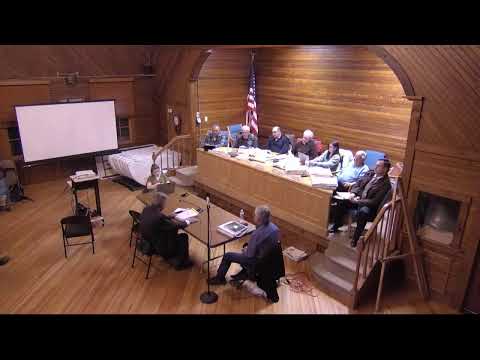
The Town of Clinton Planning Board on March 16 heard a developer presentation and more than three hours of public comment on a proposed expansion of a conference center into a larger Six Senses retreat on a 236‑acre property that straddles Clinton and Hyde Park.
Victoria Polodoro, speaking for CECNY Land Holdings LLC, told the board the company has submitted new materials including draft deed restriction language and “is committing to restrict future development on approximately 54 acres of the property,” describing a 500‑foot non‑development buffer around Brown’s Pond plus roughly 45 acres of non‑disturbance around regulated wetlands. Polodoro said the applicant also plans to pursue an incidental take permit with the New York State Department of Environmental Conservation for habitat issues and that about 5.7 acres are already proposed for permanent protection under DEC coordination.
“We have provided some draft property restriction language for your review,” Polodoro said during the presentation, adding that the wording is an initial draft and would be refined in response to board questions.
Kelly Lyalt, a planning consultant for the applicant, described the project footprint and technical approaches: a reconfigured main entrance and widened bridge, an expansion of lodging from about 15 units to as many as 65, a spa/fitness building, a farm hub and three pools, and a proposed on‑site wastewater treatment plant whose treated effluent would be discharged to Crumb Elbow Creek consistent with DEC effluent limits and routed through a vegetated biofilter prior to discharge. Lyalt said the project would cap on‑site attendance at 240 people at full capacity and estimated about 150 jobs associated with the development.
Opponents and several technical witnesses urged the planning board to issue a positive SECRA declaration and require a full environmental impact statement (DEIS), citing gaps or uncertainties in submitted studies. “If you allow a luxury resort of this magnitude to bypass a full environmental review, it sets a dangerous precedent for the entire region,” resident Maggie Shimlfenig said, calling the proposal “a massive commercial escalation” that does not fit the town’s rural character.
Multiple speakers raised water‑quality concerns about on‑site wastewater treatment and the potential for persistent contaminants such as PFAS to reach local waterways and wells. Paul Rubin, a consulting hydrogeologist, told the board the record lacks adequate hydrogeologic testing in the wetland complex and that groundwater flow connections between uplands and wetlands have not been characterized. “The applicant has not conducted any hydrogeologic testing in the wetland complex area,” Rubin said, arguing that the lack of baseline data prevents a hard look at impacts to wetlands and species.
Hudsonia, the planning board’s biological consultant (represented in the record by reports from Eric Kiviat), was repeatedly cited by public speakers as a reviewer whose analyses the public wants fully integrated into board deliberations; several residents urged the board to require seasonally timed species inventory and permit‑level review before making a final SECRA determination.
Supporters of the project countered that Six Senses is a wellness‑focused retreat with sustainability commitments and that the company has already contributed to local nonprofits and fire departments. “They presented extensive environmental studies, testing, hours and hours of presenting here,” said Emma Hanley, a local resident who supports the plan and described the applicant’s proposed safeguards as robust.
After hearing dozens of public comments, the planning board voted to extend the written comment period: all additional written comments must be submitted by 5:00 p.m. on March 27. The board also closed the in‑person hearing for the evening while leaving the written record open to allow both new public submissions and applicant responses. No formal land‑use approvals were taken at the meeting.
What’s next: Board members said they expect to resume substantive deliberations at a future meeting and to review additional technical materials, including any new consultant reports submitted before the March 27 deadline. The applicant has stated that site‑plan and special‑use permit review will follow later hearings; the board said site‑plan review is expected to resume at a subsequent meeting on April 7.
Authorities and regulatory references discussed at the hearing include the applicant’s reference to DEC permitting (incidental take permit / ITP), the town’s special‑use permit standards for conference centers (section 25045 referenced by the applicant), and SECRA (the transcript variant of the State Environmental Quality Review Act) as the statutory process many commenters asked the board to use for a full environmental review.
The planning board record for the application includes the applicant’s submission materials and consultant reports; residents and technical reviewers urged the board to ensure Hudsonia and other independent third‑party reviewers have full access to the complete docket before any final determinations.