Get Full Government Meeting Transcripts, Videos, & Alerts Forever!
Get email alerts on the Egroup Ab205 topic
No spam. Unsubscribe anytime.
Resident tells commission eGroup mischaracterized AB 205; says proposal likely ineligible for CEC approval
Summary
During public comment, a Twentynine Palms resident alleged eGroup used AB 205 as leverage though the project likely falls below the California Energy Commission’s 50 MW AC threshold; the claim went unanswered in the meeting and staff did not present a response from the applicant.
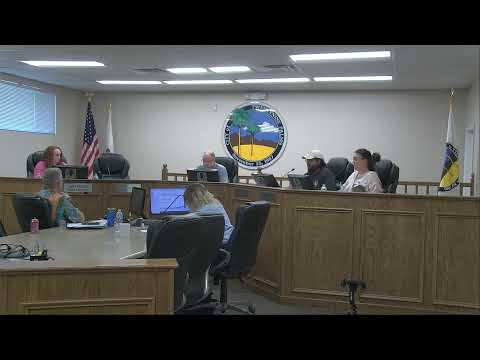
At the start of the meeting a resident, Peter Lang, told the Twentynine Palms City Planning Commission that eGroup’s repeated suggestion that it could bypass local review by seeking approval from the California Energy Commission under Assembly Bill 205 was based on incorrect technical assumptions.
Lang said his wife contacted the California Energy Commission and was told the 50-megawatt threshold is measured in AC delivered to the grid rather than DC capacity, and therefore that eGroup’s proposed project would not qualify for the CEC pathway. Lang said the company or its legal counsel either misunderstood the eligibility rule or knowingly misled the city and public, calling that "either gross incompetence or dishonesty." He urged the commission to treat future submittals from eGroup with caution.
No representative of eGroup spoke during the public comment period to respond to the allegation. Suzanne Lyons, who delivered a separate public comment later in the period, said she had researched community benefit issues and offered to share information; she did not provide the applicant’s response to the AB 205 assertion during the meeting. Staff did not present an on-record rebuttal from the applicant during this session.
Because the claim was made in public comment without an applicant response or a formal presentation by city staff, the matter remained unresolved at the meeting; staff or the applicant would need to provide direct documentation from the California Energy Commission or from the applicant’s counsel to substantiate or refute the assertion.