Get Full Government Meeting Transcripts, Videos, & Alerts Forever!
Get email alerts on the Implementation And Data Verification topic
No spam. Unsubscribe anytime.
Panel debate centers on data verification, one‑contract rule and whether to include journeyman training in ETP allocations
Summary
Stakeholders pressed ETP staff on operational details: should funding rely on DAS apprentice registrations, how to verify counts, whether umbrella sponsors should have one contract or multiple and whether journey‑level and pre‑apprentice counts should be included in formulas.
Beyond competing preferences for the four allocation models, much of the listening session focused on implementation: how to count apprentices, how to verify performance and retention, and how to apply caps or one‑contract rules to umbrella sponsors.
Multiple training directors urged ETP to rely on program records and to make requirements administrable. Alex Beltran (Finishing Trades Institute) said independent programs should "have its own right to apply" rather than being lumped under an umbrella that obscures craft identity. Trade representatives proposed thresholds to distinguish small, medium and very large programs: Chair Brett Court and commenters discussed a potential breakpoint in the 'giant' range around 500 apprentices and suggested small programs might be under 100, medium 101–499, and giant 500 and over as initial working bands.
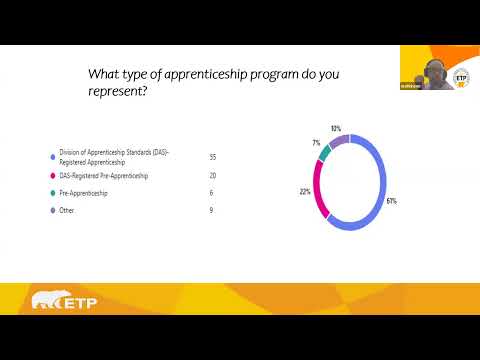
The panel also debated using the Division of Apprenticeship Standards (DAS) registration as the authoritative headcount. Chair Brett Court asked staff whether a DAS data transfer could be "the record of truth of where the number of active apprentices is," while others warned DAS entries can be delayed or backdated. Kelly Greer and union representatives recommended cross‑checks with program schedules, payroll/EDD and regular program reporting; several attendees said JATC directors can produce counts quickly for audits and board reporting.
On performance verification, commenters said ETP should confirm that apprentices are employed during training, meet wage and retention requirements, and that contracts show earned funding rather than only awarded amounts. Steven Miles (Sprinkler Fitters UA Local 483) described ETP money as intended for "over and above" investments — equipment, extra class sessions and journey‑level maintenance — rather than to fund core program operations.
Panel members asked staff to evaluate data sources and administrative feasibility; no procedural changes were adopted at the listening session. Staff will return with recommendations incorporating stakeholder input about caps, one‑contract approaches, DAS verification and whether to include pre‑apprentice and journey counts in allocation formulas.