Get Full Government Meeting Transcripts, Videos, & Alerts Forever!
Get email alerts on the Corrections Finance topic
No spam. Unsubscribe anytime.
Livingston Parish approves up to $11.64 million in sales‑tax bonds to retrofit local jail
Summary
The Livingston Parish Council voted unanimously March 26 to authorize up to $11.64 million in sales‑tax revenue bonds to retrofit a work‑release building into a 128‑bed facility (phase one), an effort officials say will keep inmates in‑parish and reduce out‑of‑parish housing costs by roughly $1 million a year.
The Livingston Parish Council on March 26 approved a resolution authorizing the parish to pursue issuance of up to $11,640,000 in sales‑tax revenue bonds to fund a retrofit of an existing work‑release facility into higher‑security jail beds.
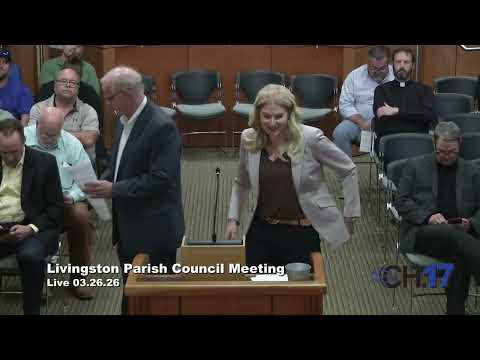
Jamie Felder, who presented the project for the sheriff’s office, told the council the work is being planned in two phases. "Phase one is about 8.5 million to get that done," Felder said, describing the conversion of an existing metal work‑release building into a 128‑bed facility that would be brought up to Department of Corrections code. She said construction for that phase would take about a year.
Why it matters: Parish officials said housing parish inmates locally will reduce the recurring cost of sending inmates out of parish, which staff estimated at roughly $26–$30 per inmate per day. Council members pressed staff about operational impacts, including additional staffing and transportation. "We're going to save 1 million plus a year and it's 8.5, so in 8 years it'll be paid for itself," Councilman Goff said during the discussion.
Officials said the project is intended to reduce the number of inmates sent to other parishes — a practice that has both fiscal and family‑access implications. Felder said the phase‑two expansion (an additional ~100 beds) would be pursued if outside funding becomes available.
The council voted to proceed with the bond issuance and associated actions — including engaging bond counsel, a municipal advisor and underwriter/placement agent — by a unanimous voice vote.
Next steps: Staff will prepare bond documents and apply to the State Bond Commission as required by state law. Construction timing for phase one is estimated at about a year once financed and permitted.
(Reporting for this article is based on presentations and the council motion recorded March 26, 2026.)