Get Full Government Meeting Transcripts, Videos, & Alerts Forever!
Get email alerts on the Port Projects topic
No spam. Unsubscribe anytime.
Port unveils splash pad, playground and Pond 20 plans; says local MSA will rise
Summary
Port of San Diego commissioners told Imperial Beach council that a planned $2.4 million splash pad and nearly $1 million Dunes Park playground are moving ahead and that Pond 20 wetlands/mitigation bank work continues, while the city won an almost $800,000 increase to its municipal services agreement reimbursement.
The Port of San Diego told the Imperial Beach City Council on Wednesday that several near-term projects and a multi-year wetlands plan could deliver new public amenities and future revenue for the city.
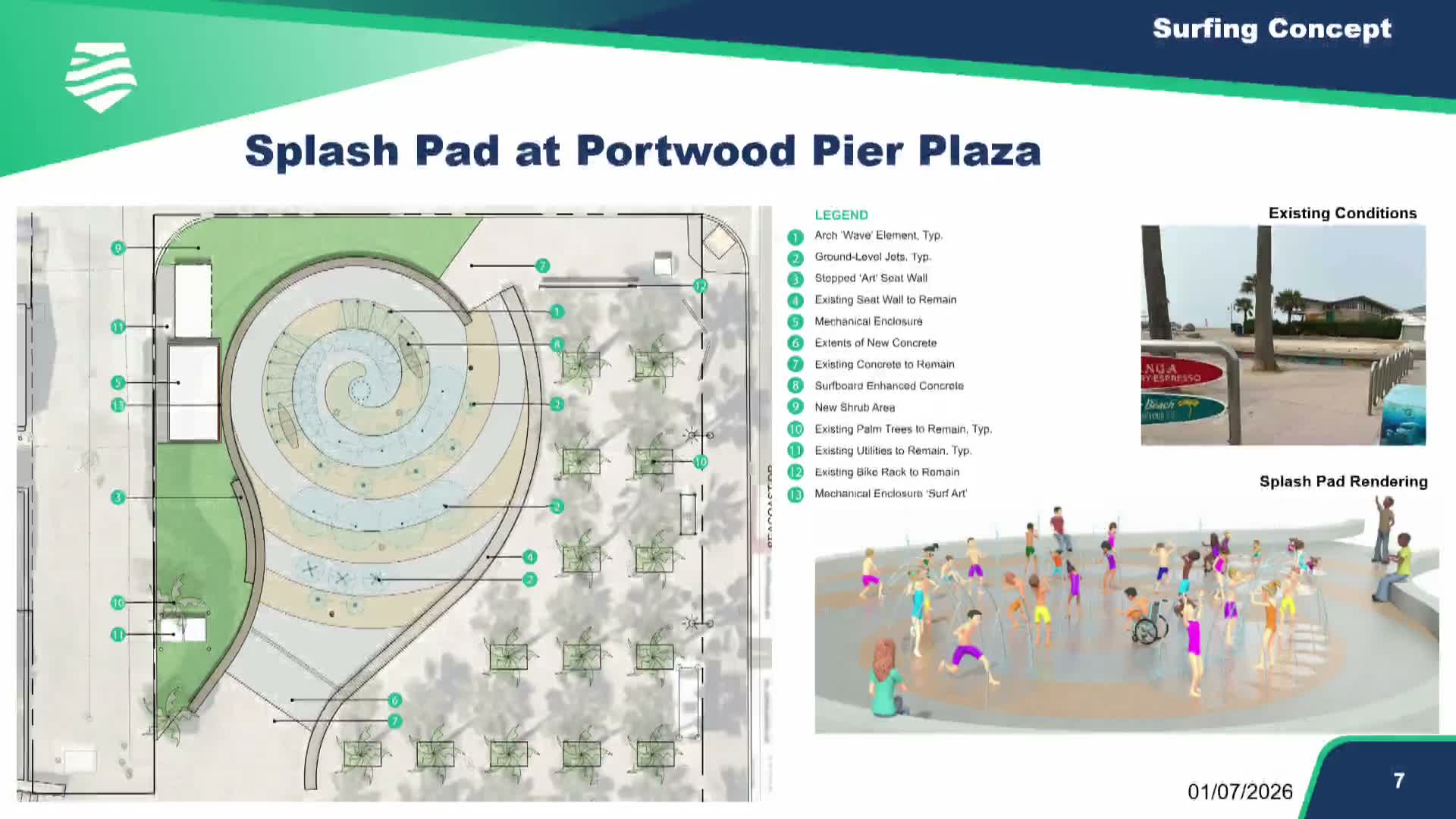
Dan Malcolm, a Port of San Diego commissioner, said the Portwood Pier Plaza splash pad has a total estimated cost of about $2,400,000. "We've already done design and permitting. Procurement is done. We are actually going to start construction, I think, in about a month," Malcolm said. Port staff described the project as a children’s water-play facility that would replace aging equipment at the pier and include an artist mural by a local creator.
Malcolm also outlined a $980,000 proposal to replace playground equipment at Dunes Park, with the Port contributing roughly $155,000 and the Port’s balanced capital program funding the remainder. He said the new playground will use more durable materials designed to withstand salt-air conditions and will be themed for whales with safety netting and new surfacing.
On the larger regional planning front, Malcolm updated council members on Pond 20, a long‑running mitigation-bank initiative to convert roughly 76.6 net acres of derelict salt‑works into high‑quality marine wetlands. "It's a mitigation bank," he said, describing the goal as restoring environmental value to the site while enabling developers who must buy wetlands credits to fund the work. He noted the per‑acre price for mitigation credits has risen substantially since the project's early planning years, from roughly $300,000 per acre to current estimates in the $1.3–$1.5 million range.
The Port also explained a change to the municipal services agreement (MSA) that increases Imperial Beach’s reimbursed amounts for services the city provides on tidelands (sheriff, fire, lifeguards, tidelands maintenance). Malcolm said the MSA adjustment is retroactive to July 2025 and represents an almost $800,000 increase from prior baseline levels.
Council members pressed Port staff on timing and local control. Councilmember Seabury suggested community volunteer days to help maintain pier railings. Others asked how mitigation‑bank proceeds might be used in Imperial Beach; Malcolm said the structure is intended to generate net funds that the Port and the city could direct toward economic development projects once sales begin. The Port reiterated that federal and state resource agencies must approve the banking instrument and that staff expects completion of the enabling paperwork in 2027 prior to selling credits and funding construction.
Council voted to thank the Port for the presentation and to continue coordination; no formal council action on Port funding was required at the meeting.