Get Full Government Meeting Transcripts, Videos, & Alerts Forever!
Get email alerts on the Air Quality topic
No spam. Unsubscribe anytime.
Prather Lab sound alarm: hydrogen sulfide spikes far exceed California standards in Imperial Beach
Summary
Researchers from the Prather Lab told the Imperial Beach City Council that hydrogen sulfide (H2S) concentrations near the Tijuana River Valley are spiking to levels hundreds to thousands of times above California standards; presenters recommended indoor filtration and made near-real-time data available online.
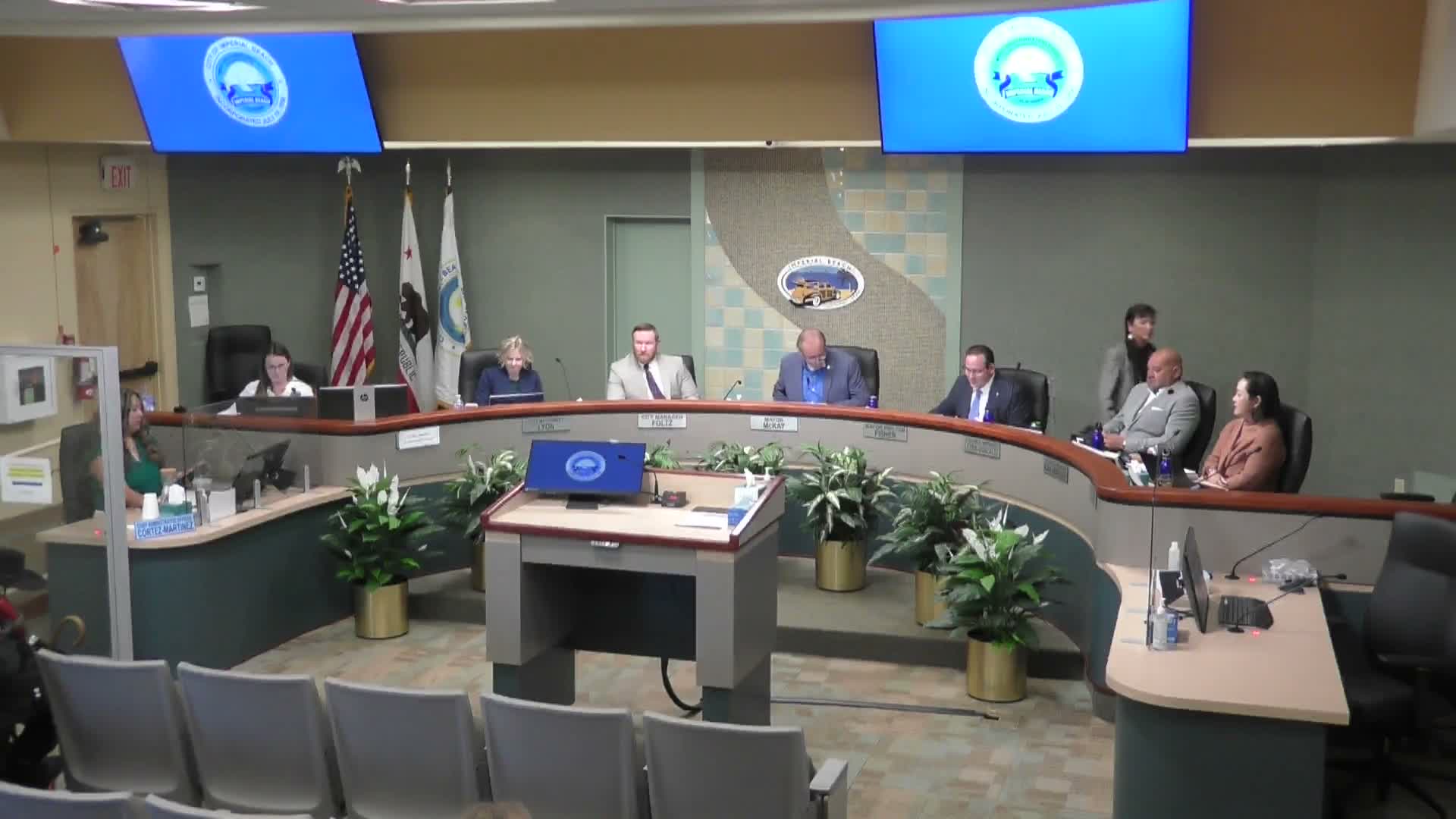
Leila Lehi Masri, a senior graduate student in Professor Kim Prather’s laboratory at Scripps Institution of Oceanography, told the Imperial Beach City Council on April 15 that local monitoring shows repeated, sharp spikes in hydrogen sulfide and other pollutants tied to the Tijuana River Valley.
Masri and Aurora Tchaikovsky, both presenting for the Prather Lab, said the team deployed a mobile laboratory and coastal sampling equipment in 2024 and has since measured criteria pollutants and a range of gases and aerosols. "One-minute peak concentrations reach as high as 4,500 parts per billion," Masri said, noting California Air Resources Board guidance of 30 ppb (hourly) and a chronic standard of 7.3 ppb. Masri added that nightly averages in January–April 2026 have often exceeded the CARB hourly standard and that the laboratory’s instruments detect pharmaceuticals, illicit-drug residues and heavy metals in aerosols and foam samples.
The presenters described mechanisms that aerosolize contaminants at a Saturn Boulevard "hotspot," where a culvert’s waterfall-like flow creates river spray aerosols that can carry compounds from wastewater into the air. Tchaikovsky described coastal sampling showing similar coastal aerosolization at the Imperial Beach pier area and said the team is working on genomic sequencing and heavy-metal analyses to clarify risks.
In response to council questions, the presenters recommended continuing distribution or adoption of indoor filtration: high-efficiency particle filters combined with gas-absorbing media such as potassium permanganate or activated (black) carbon. "If you have an HVAC system, studies have shown that HVAC systems are known to improve indoor air quality," Masri said, noting county filters include permanganate media. Presenters also pointed the public to near real-time monitoring on their Airborne Institute website and said they will continue field campaigns and targeted studies of foam composition and oxidative potential.
Why it matters: The lab’s measurements show short-term peaks that are orders of magnitude above state benchmarks and repeated nightly exceedances of the hourly standard. Council members noted the public-health implications and pressed staff to leverage the data with state and federal partners. Council Member Nakawadase asked staff to bring a draft letter to the May 6 meeting requesting the governor declare a state of emergency related to the cross-border sewage and health crisis; the request was seconded during future-agenda time.
What council asked next: Members asked about ties to state or federal agencies, the equipment’s sensitivity and whether rechanneling the river would reduce aerosolization. Presenters said Dr. Prather has been in talks with state officials about an emergency declaration and that the EPA has outlined short-term response plans, but the lab did not indicate formal federal adoption of their dataset. Presenters emphasized that some aerosolized compounds are detectable because of highly sensitive instrumentation and that sediment, water-column and coastal samples remain part of their ongoing work.
The presentation closed with council and staff seeking practical short-term measures for residents—use of indoor filtration, monitoring the lab’s website for near-real-time H2S readings, and coordination with county and state public-health partners.