Get Full Government Meeting Transcripts, Videos, & Alerts Forever!
Get email alerts on the Subdivision topic
No spam. Unsubscribe anytime.
Board carries Hunter Avenue Partners’ three‑lot subdivision after lengthy testimony and neighborhood safety concerns
Summary
Hunter Avenue Partners proposed subdividing 330 Westfield Avenue into three single‑family lots; the board heard expert planning testimony and multiple neighborhood speakers who raised traffic, drainage and character concerns, then carried the application to April 27 so absent members can review the record and vote.
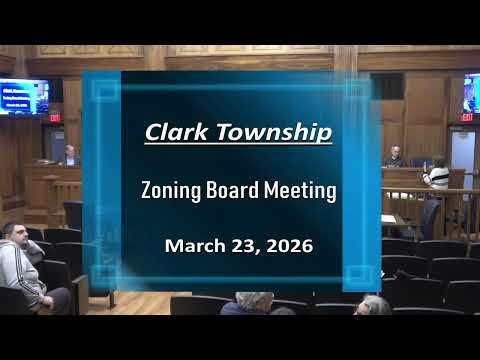
Hunter Avenue Partners' proposal to divide 330 Westfield Avenue (corner of Westfield and Emerald) into three single‑family lots drew extended testimony and public opposition at the Clark Township Board of Adjustment on March 23. After expert testimony and lengthy public comment focused on traffic safety, drainage and neighborhood character, the applicant agreed to carry the matter to the board's April 27 meeting so absent board members may review the record and participate in the final vote.
Engineer and planner Anthony Gallerano testified the parent parcel is about 23,551 square feet and that creating three lots would require a D5 density variance because the R100 zone nominally allows two lots. He described the layout: two interior lots with 75‑foot frontages and 7,500 square feet each, and a corner lot of about 8,551 square feet with roughly 83.4 feet of frontage. "So, this is a 23,551 square foot lot with a minimum required lot size of 10,000 square feet," Gallerano said when explaining why the proposal triggers a density variance. He argued that three modestly sized houses would be more consistent with nearby lot patterns than two much larger houses would be.
The board reviewed supporting exhibits and an analysis of nearby lots; Gallerano and the applicant's planner said many lots in the surrounding R100 and adjacent R75 zones are nonconforming with respect to frontage and area, and that the three‑lot solution fits the neighborhood scale better than a two‑lot subdivision would. The project would provide stormwater control for each lot via underground detention and keep impervious coverage well below the ordinance maximum (engineer testimony cited per‑lot impervious well under the 50% threshold and proposal around 31% or less).
Multiple neighbors who live on Westfield Avenue and Emerald Place raised concerns. Residents repeatedly cited traffic and safety risks from adding driveways close to Westfield Avenue's intersection and a new traffic signal, and asked whether police or fire had weighed in; the board noted police and fire review memos included no comments. Neighbors also pressed the applicant on drainage, tree removal and visual privacy for adjacent yards. "The density of the project does not appear consistent with the existing zoning intent or the established character of our neighborhood," said John Solowinsky, a resident across the street, voicing the common neighborhood concern about scale and traffic.
Applicant representatives, including principal John Nimchek and planner/engineer Anthony Gallerano, responded to questions on parking, drainage and landscaping. The applicant proposed two‑car garages and two driveway spaces per house (exceeding minimum parking requirements cited in testimony), underground stormwater detention per lot, and a landscape plan with street trees and a vinyl privacy fence; the town's engineering staff flagged the need for a tree replacement plan and potential shade‑tree approvals.
After finishing the evidentiary record and hearing public comment, the applicant requested a continuance to allow two absent board members to watch the meeting video and participate in a full seven‑member decision. The board agreed and carried the application to its April 27 meeting. The board chair said there will be no new testimony at the continued hearing and that the next session will be limited to deliberation and the vote by the full board.