Get Full Government Meeting Transcripts, Videos, & Alerts Forever!
Get email alerts on the Budget 2026 27 topic
No spam. Unsubscribe anytime.
Budget committee reviews proposed 2026–27 budget; presenter proposes smoothing bond levy and outlines $650K staffing reductions
Summary
Philomath SD 17J’s budget presenter reviewed the proposed 2026–27 budget, described a $20 million lump-sum bond payoff in 2027, proposed a $2,215,000 bond levy to smooth community impact, and outlined $650,000 in planned staffing and service reductions plus transportation and nutrition funding updates.
The Philomath SD 17J budget committee spent the bulk of its meeting reviewing the district’s proposed 2026–27 budget, with the presenter (Speaker 1) detailing revenue assumptions, contract changes and recommended reductions to close a projected gap.
“We're here today to talk about the proposed budget that we presented to you last week by email,” the presenter said, introducing the highlights rather than a line-by-line review. The presenter built several assumptions into the document, including enrollment estimates (16.02 ADM, weighted to about 1,915 ADMw for funding purposes) and higher transportation costs tied to a new five‑year contract.
Transportation and food service: The district awarded a five‑year transportation contract to First Student to replace Mid Columbia, and Speaker 1 told the committee the contract carries a significant price increase; the presenter said he added roughly $300,000 into the state school fund reimbursement estimate to reflect that change. On nutrition services, the presenter said the food‑service fund remains in positive balance under the community‑eligibility provision and that the district pays a monthly service fee (about $4,500) plus roughly $35,000–$40,000 monthly for supplies. Committee members discussed options to increase fresh, locally prepared menu items while acknowledging higher costs and vendor delivery constraints.
Grants and federal reimbursements: The presenter reported preliminary federal allocations and a three‑year summer learning grant worth about $200,000 that the budget already includes. He also flagged an expected $470,000 in federal nutrition reimbursements and noted additional federal revenue and survey work that together account for roughly $1,000,000 in anticipated federal receipts.
Staffing, reserves and reductions: To close an estimated shortfall, the presenter outlined proposed reductions across staffing, services and supplies totaling about $650,000 (salary and benefit cost), and a broader plan to find roughly $1,000,000 in reductions through attrition, reduced transfers and other cuts. “If we had kept everything the same…we didn't have enough revenue to cover that,” the presenter said, describing the rationale for the reductions. Committee members emphasized an attrition‑first approach and warned of potential impacts if future years require deeper cuts or a reduction in force.
Debt and bond levy: The presenter reminded members of a $20,000,000 lump‑sum payment due in June 2027 and proposed setting the bond levy at $2,215,000 for the coming year while using interest and existing fund balances to moderate rate changes to taxpayers. The presenter told members the district expects approximately $19,000,000 on hand at the end of fiscal year 2026, enabling a lowered levy request this year while still meeting the scheduled payment and smoothing future levy needs.
Other topics: Committee members discussed capital priorities (including a nearly completed turf fundraising campaign that still needed about $80,000 toward a roughly $600,000 project), technology refresh plans funded in part by e‑rate and grants, facility needs (carpet and HVAC work, a fire‑alarm replacement after a lightning strike), and the mechanics of transfers to reserve funds including unemployment and capital reserves.
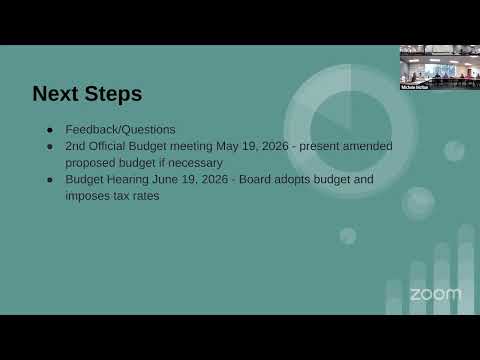
Next steps: The presenter read the formal proposed levy components aloud — a permanent rate of 4.8664 per $1,000 of assessed value, a local option levy rate of $1.50 per $1,000, and a local option levy amount request of $2,215,000 for the general obligation bond levy — and invited further questions. The transcript does not record a formal roll‑call vote on final adoption in the provided excerpt; members were given an opportunity to request additional information or return at the second meeting for further action.