Get Full Government Meeting Transcripts, Videos, & Alerts Forever!
Get email alerts on the Weather Closures topic
No spam. Unsubscribe anytime.
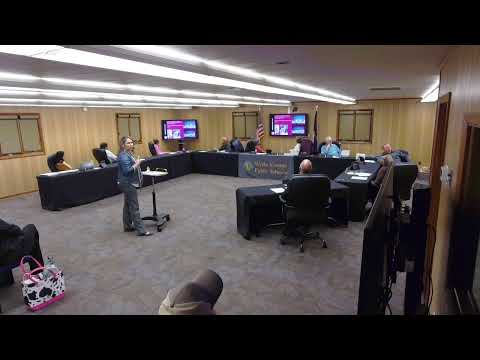
W County School Board debates timing and communication of weather-related closure calls
Summary
Board members pressed administration about announcing delays and closures; administration defended basing calls on observed road/weather conditions and said night-before notices occur when conditions are already present, while some members urged more prediction-based two-hour delays and a public one-page explanation for families and staff.
The W County School Board spent significant time discussing how the district decides to delay or close schools for weather, with board members pressing for clearer public guidance and faster notice for families and staff.
At the meeting, Pamela Blair had asked the board to consider a policy that would “announce delays and closings in a consistent manner that is, if possible, done the night before” to help families plan. Board member Miss Tomak said she had received many calls from parents asking why the district is often among the last to notify the public.
Dr. P, addressing the board, said the district’s long-standing practice has been to base snow and closure decisions on current, observed conditions rather than on forecasts. “We make snow calls based upon the actual weather,” Dr. P said, describing procedures that include riding roads, consulting the sheriff’s department and coordinating with neighboring divisions. He said night-before notifications usually occur around 5:30 p.m. when conditions or forecasts for the next day are already clear.
Board members said they understood the safety-first rationale but pressed for better communication and clearer expectations. One member argued that a predictable two-hour delay called the night before would help working parents and reduce last-minute disruptions. Dr. P and other administrators warned that frequent prediction-based delays would erode instructional seat time and complicate testing and CTE schedules: “If you start consistently calling based upon a prediction throughout the winter, you’re going to have a whole lot of two-hour delays,” an administrator said.
Administrators described internal staff codes (code one, code two, code three) that alter staff reporting schedules and said 12-month employees are contacted directly. The board asked administration to post an explanatory one-page summary on the district website and to include the staff codes and rationale so families understand how and why calls are made.
The board did not adopt a new weather-closure policy at the meeting; members directed staff to prepare clearer public materials and to continue evaluating whether a two-hour prediction-based option should be used in limited circumstances.