Get Full Government Meeting Transcripts, Videos, & Alerts Forever!
Get email alerts on the Rate Recovery topic
No spam. Unsubscribe anytime.
FERC says it will adjudicate cost allocation from DOE 202(c) orders but notes statutory refund limits in a long-running rate case
Summary
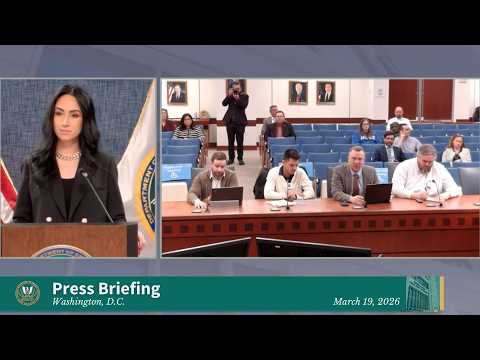
Reporters raised concerns about potential ratepayer costs from DOE 202(c) emergency orders and about a 15-year E1 complaint. Chairman Sweat said determining an energy emergency is DOE’s discretion; FERC’s role is to adjudicate cost allocation in docketed matters and the Federal Power Act limits refunds to a 15-month period.
Reporters used the briefing to press FERC on financial implications for consumers tied to emergency actions and protracted litigation.
Zach Hail noted media estimates that recent DOE 202(c) orders have cost about $230 million so far and that a broader, rolling application could cost an estimated $3 billion to $6 billion; he asked whether FERC is concerned about the ratepayer impact and how costs should be allocated. Chairman Sweat responded that declaring an energy emergency under DOE’s authority is the Secretary of Energy’s discretion and sits outside FERC’s jurisdiction; FERC’s statutorily defined role is limited to adjudicating, in separate dockets, what constitutes a fair and reasonable allocation of costs that arise from any DOE order. He said the commission will examine the facts and law, including market and ratepayer impacts, on a case-by-case basis.
On a long-running complaint referenced as E1, James Downing asked how the commission balances making consumers whole with regulatory certainty after a case has lasted roughly 15 years. The chairman said the complaint at the heart of E1 was filed in 2011 and that judicial review and repeated agency proceedings can extend resolution and increase costs to ratepayers. He said FERC’s authority under the Federal Power Act limits the commission’s ability to award refunds to a 15-month look-back period; in the portion of the consolidated docket where the commission could act, it reduced the return on equity and ordered refunds effective Oct. 14 plus the 15-month refund period.
Why it matters: Reporters’ figures illustrate potential scale for ratepayer exposure under emergency interventions; the chairman emphasized FERC’s narrowly defined role in cost-allocation proceedings and the statutory limits that can constrain refunds even where older complaints have generated prolonged litigation.
The briefing then moved to staff-level questions on the agency agenda.