Get Full Government Meeting Transcripts, Videos, & Alerts Forever!
Get email alerts on the Ai Data Centers topic
No spam. Unsubscribe anytime.
CSAC member Yan warns AI data centers could strain regional power and water systems
Summary
At a Foster City sustainability meeting, member Yan presented research showing large AI data centers can demand significant electricity and water; committee members discussed resilience measures, potential outreach and moving the issue to engagement work.
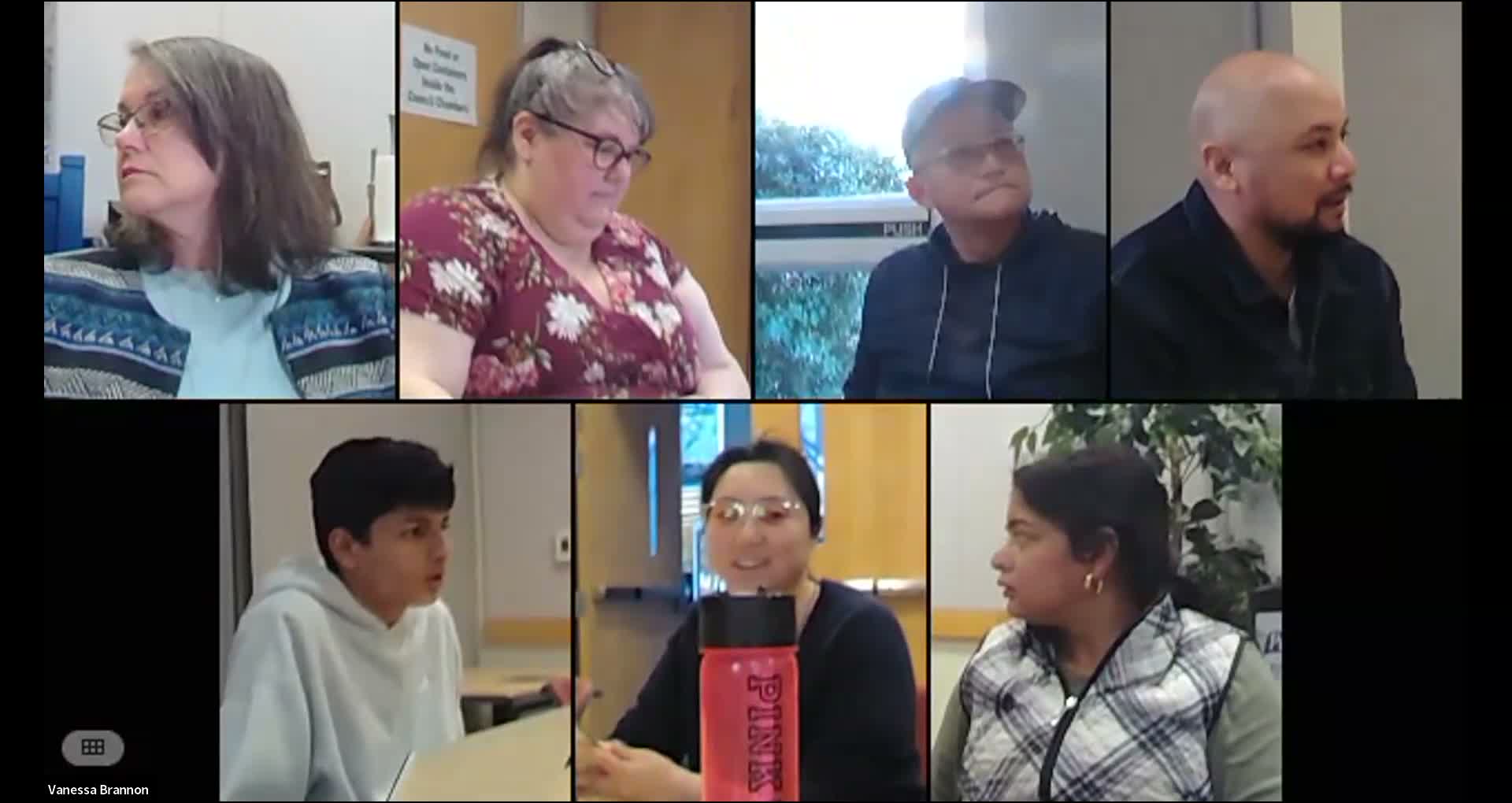
Yan, a member of the Foster City Citizen Sustainability Advisory Committee, told the group that the growth of AI infrastructure has physical consequences for energy, water and land use and that even facilities built outside the city can affect local resources.
"The projected, capital expenditure on AI infrastructure alone is expected to exceed $650,000,000,000," Yan said, summarizing recent estimates and noting that some data centers are within roughly an hour's drive of Foster City. Yan added that AI workloads are expected to push electricity demand significantly, saying "the electricity consumption is expected to be 12% of all US electricity consumption." He also highlighted water use, saying "a standard 100 word AI prompt could consume 500 milliliter of water" and that large facilities can use "up to 5,000,000 gallons a day." (Quotes as spoken during the committee meeting.)
Why it matters: committee members framed the presentation as a reminder that infrastructure decisions made regionally — where land and electricity are cheaper — can create spillover effects that matter locally. Even if Foster City does not host mega data centers, members noted the city shares PG&E grid infrastructure and regional water supplies with neighboring jurisdictions.
Committee responses were mixed but practical. Member Akh Sheylak cited broader usage patterns, saying a recent stat suggested "63% of most searches are now through the AI mode," and warned that everyday services are increasingly driven by AI tools. Other members raised immediate resilience concerns: a heavier load on the grid could increase the frequency or severity of outages and force reliance on backup generators that run on fossil fuel.
Several members urged a measured local response. Shannon suggested outreach and public education, while another member proposed researching environmental impact assessments filed for nearby projects in San Jose and Santa Clara to document projected power and water use. "Perhaps this can be moved to the engagement committee," one member said, urging outreach and public education rather than an immediate regulatory push.
What happens next: Yan offered to do additional research on project filings and local environmental reviews and committee members suggested the engagement subcommittee could develop public‑facing materials explaining how regional data center growth links to local energy and water resilience.
The committee did not take formal action on policy at the meeting; discussion focused on awareness, data-gathering and possible next steps for outreach and research.