Get Full Government Meeting Transcripts, Videos, & Alerts Forever!
Get email alerts on the Oak Knoll Project topic
No spam. Unsubscribe anytime.
Neighbors press commission to drop Oak Knoll cul-de-sac park plan over safety and parking worries
Summary
Residents urged the Belmont Parks & Recreation Commission to abandon or sharply scale back proposed improvements to the Oak Knoll cul-de-sac, citing narrow streets, regular delivery and emergency-vehicle blocking, and lack of parking; staff said no action would be taken and next steps will focus on legal right-of-way and concept plans.
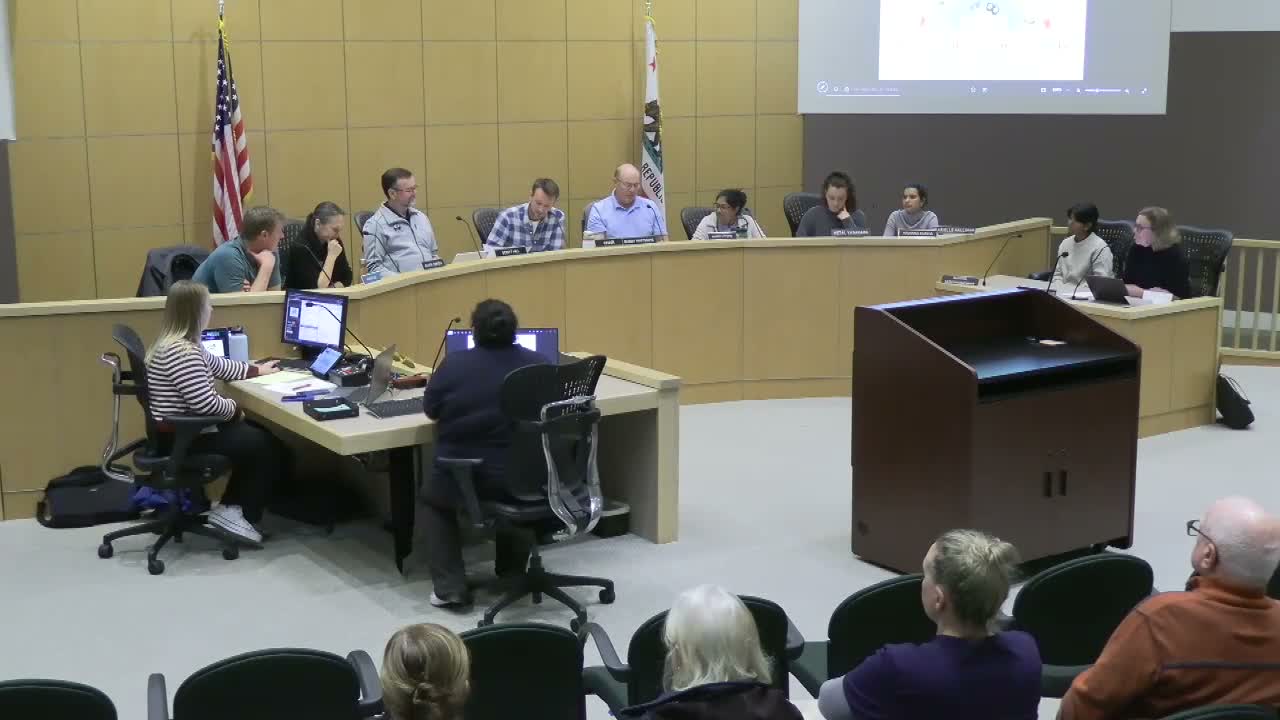
Oak Knoll neighbors urged the Belmont Parks and Recreation Commission on April 1 to halt plans to turn the grass circle at the end of Oak Knoll Drive into a neighborhood resting spot or small park, saying the narrow street and limited parking create safety hazards for children and emergency vehicles.
"If there is one delivery vehicle on Oak Knoll, you cannot proceed," said Demetrius, who identified his address near the circle and said he has twice watched emergency responders struggle to reach homes. "I suggest that you consider it as a no." The sentiment was echoed by several nearby residents who said parking and traffic—not a desire to avoid public amenities—underpin their opposition.
Staff presented the project as one of several small sites identified in the city’s parks, recreation and open space master planning process (the PROS plan) to improve equitable access to parks within a roughly five-minute walk. Recreation staff said landscape architects advised that a play structure is unlikely to fit in the space because required safety fall zones and existing trees leave too little room; any improvement would be smaller than the current circle to preserve vehicle clearances.
"This is not a plan that the city is going to impose on the community until and unless we have consensus to do so," Director Shearer said, reading a recap of a community meeting held last week that drew about 30 attendees and a roughly even split of support and opposition.
Residents asked the commission to confirm whether the city even has authority to develop the circle. "If the city doesn't own the property, we shouldn't even be here," said Paul, a former San Francisco battalion chief, who also warned that children running in a small park could quickly end up in the street.
Commissioners and staff agreed there was no action to take at the meeting. Commissioners asked staff to research the legal status and public right-of-way for the circle, to check emergency and service-vehicle access requirements, and to develop high-level conceptual options to return to the neighborhood for further feedback. Staff said options to discourage parking—such as boulders—and very modest interventions (benches, native plantings, or a smaller inner amenity area) were under consideration, but emphasized that any footprint would be constrained so vehicles can still pass.
Several commissioners noted the original PROS plan identified the site to address an equity gap—areas where residents lack a nearby place to pause during a walk—but said the commission should prioritize safety and community consensus.
Next steps: staff will compile public comments and follow up on the site's legal status and access constraints, then prepare conceptual designs for additional outreach. There was no vote or formal design approval on April 1.