Get Full Government Meeting Transcripts, Videos, & Alerts Forever!
Get email alerts on the Tutoring Pilot topic
No spam. Unsubscribe anytime.
Board hears proposal for five‑week virtual tutoring pilot to boost third‑grade I‑Read scores
Summary
District staff introduced a limited five‑week, high‑dosage virtual tutoring pilot from Paper to support third graders who failed the I‑Read; trustees approved Title I funding in principle but raised concerns about cost, contract terms and replacing in‑person tutors.
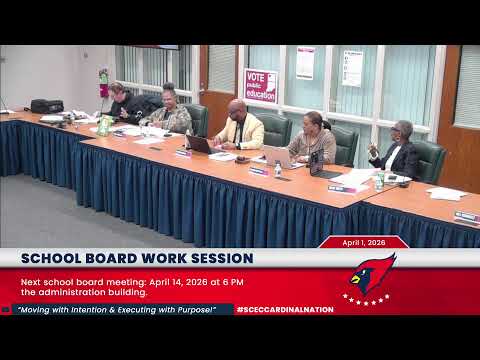
Dr. Bouet introduced a recommendation at the April 1 work session for a targeted high‑dosage tutoring pilot aimed at improving third‑grade I‑Read outcomes and yielded the floor to Mr. Lewis of Paper for a brief program presentation.
Paper representative Mr. Lewis said the program uses live, videobased tutoring ("this is live this is not AI this is not pre‑recorded videos these are ... real live instruction") in small groups (one tutor to three students) to focus on the I‑Read 3 foundational reading skills. He described a five‑week pilot (three 30‑minute sessions per week, 15 sessions total) timed to prepare students for an I‑Read retest on May 11, with pre‑ and post‑assessments and short exit tickets after each lesson to track mastery.
The proposal identifies 40–50 students across the district’s four elementary schools (the plan presented to trustees called out 10 students at each school and 20 at McKinley, for a 50‑student pilot that the district said is not yet fully confirmed). Mr. Lewis said Paper tracks engagement (screen on, activity tools) and will share dashboards and session‑level data with district curriculum staff and principals so teachers and leaders can monitor student progress.
On funding, Trustee Trusty Smith said the district will use Title I and existing after‑school budgets rather than new district general funds ("We will fund this using title one"). Mr. Lewis provided unit pricing of $29 per student per session and said the vendor price model for the pilot calculates to roughly $20,250 for 50 students (15 sessions each). Trustees pressed for a contract that reflects per‑student usage rather than a fixed flat fee and discussed including a minimum‑enrollment clause or an editable contract rate so the district is not locked into a high flat amount if fewer students enroll; Mr. Lewis said Paper can structure the agreement to charge only for enrolled students or implement an amendment or minimum, and described options such as credits or rollovers for unused sessions.
Board members also asked logistics questions: tutoring occurs during the after‑school block (roughly 3:00–4:30 p.m., with tutoring occupying a 3:00–3:30 slot in schools’ after‑school schedules), students who participate will ride regular after‑school activity buses home unless their parents pick them up, and each participating school will designate an after‑school staff member to be physically present to monitor students while they connect to the virtual tutor.
Several trustees expressed reservations about replacing in‑person tutoring with an external virtual provider and asked for additional review of the proposal packet and contract language. Trustee Trusty Gomez said she prefers in‑person tutoring with staff who know the students and requested more time to examine the roughly 100‑page proposal. Trustees asked the administration to follow up with Paper on minimums, a per‑student pricing option, and final enrollment confirmation before executing any agreement.
The presentation concluded with the district agreeing to continue contract negotiations and return to staff with clarified minimums, contract language and final participant lists.
Next steps: district staff will follow up with Paper to resolve minimum‑enrollment and contract‑rate language, confirm participating students, and provide the board with a revised cost breakdown and contract terms before execution.