Get Full Government Meeting Transcripts, Videos, & Alerts Forever!
Get email alerts on the Parking Policy topic
No spam. Unsubscribe anytime.
Staff seeks higher parking fines to improve compliance; council weighs timing and equity
Summary
Staff recommended raising several parking citation amounts to align with neighboring cities and to reduce repeat violations; councilmembers debated whether to delay full implementation because of the program's recent start and local affordability concerns.
City staff proposed raising East Palo Alto—ureau of parking citation fees that were last updated in 2015, arguing the current fines are lower than neighboring jurisdictions and therefore less effective at changing parking behavior.
Denise Garcia said the staff recommendation would raise standard parking violations (for example, parking in crosswalks or no-parking zones) to $45 to match regional practice and increase higher penalties for commercial, oversized or repeat violators; staff also proposed a larger "gridlock" penalty aligned with county traffic-court guidance. The aim is to improve compliance and reduce conflicts that block streets and sidewalks.
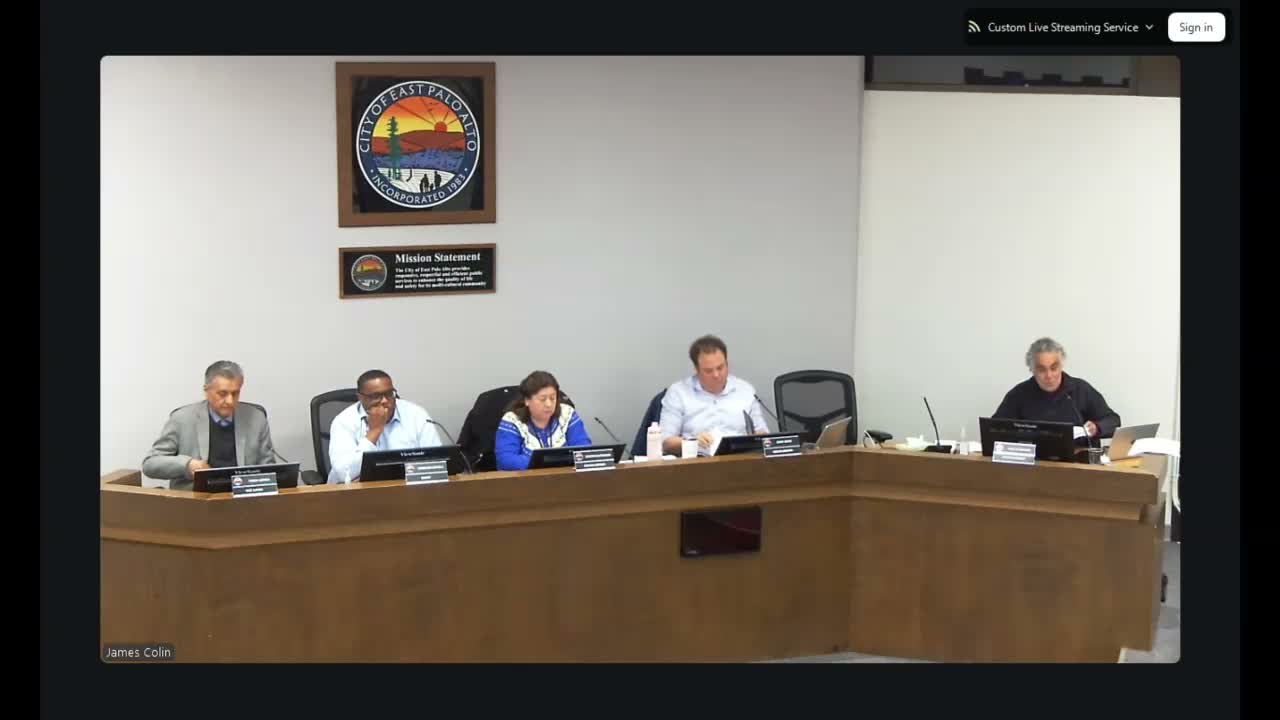
Councilmembers acknowledged the need to discourage recurring violations but raised concerns about the timing and equity impacts of higher fees. One councilmember suggested delaying implementation until staff and the council can evaluate the newly launched local enforcement program, and recommended holding off on broad increases for several weeks or months while making a narrow change for gridlock violations. Other councilmembers supported the staff recommendation to align rates regionally and to use fines as a behavioral lever.
Public comment stressed East Palo Alto's low-income profile and urged caution about penalizing residents who sometimes miss a posted sweeping day because of work schedules or other hardships.
Next steps: staff said the changes would take effect immediately unless the council directs a delayed implementation; staff offered to return in one year with an evaluation of citation volumes, compliance trends and community feedback.