Get Full Government Meeting Transcripts, Videos, & Alerts Forever!
Get email alerts on the Code Enforcement topic
No spam. Unsubscribe anytime.
Neighbors press Bethlehem council over months‑long trash pile at 1953 Eaton Avenue
Summary
Residents described a six‑month pile of odorous garbage at 1953 Eaton Avenue and told council they have seen slow enforcement and poor access to citation and magistrate information; city staff said the recycling bureau handles enforcement and that magistrate scheduling can delay court remedies.
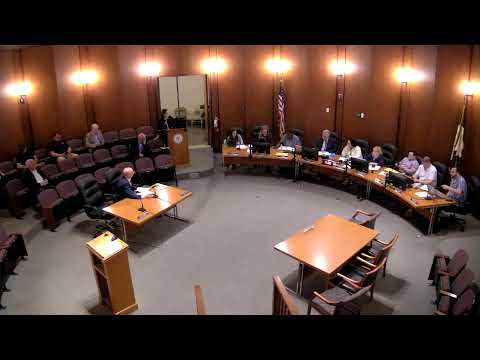
Residents from the Eaton Avenue area told the Bethlehem City Council on May 5 that a persistent pile of trash at 1953 Eaton Avenue has created health and safety concerns and that city enforcement has been slow or opaque.
"We're not getting any results about a garbage situation at 1953 Eaton Avenue," said John Embardino, who said neighbors had endured about six months of piled waste and repeated warning letters. "They gave him several warnings...Weeks go by before anything happens." Embardino said attempts to find magistrate hearing information were unsuccessful and that the process left neighbors frustrated.
Other nearby residents corroborated that account. Mike Albanese, who identified himself as a property owner on West Union Boulevard, told council the pile includes 15 to 20 bags, furniture and open bottles and said the problem dates to about Feb. 20, 2026. "It's leaking into the Genoa Street Alley," Albanese said, adding that the trash attracts animals and creates a public‑health nuisance.
City officials described the enforcement steps the administration has taken and the limits of municipal authority. A city official in the recycling bureau explained that trash enforcement moved to the recycling bureau in 2022 and that one enforcement officer handles roughly 650–700 complaints a year. The official said the usual lifecycle is: investigation, a verbal warning, then a notice of violation and, if necessary, referral to the district magistrate.
"When something goes to the magistrate, it is then out of our hands," the official said, adding that the magistrate had not yet scheduled a hearing for this case despite repeated outreach. The city said it has issued a second citation (a $500 fine under the ordinance for a second violation) and will continue to press the magistrate's office to schedule a date.
Council members pressed staff on alternative remedies and timeline. Several members asked whether the health bureau or condemnation powers could be used if the property posed an immediate danger; staff said condemnation is reserved for severe hazards (for example, active hoarding that makes a structure unsafe) and that additional enforcement options may be available under the health ordinance but would require review.
Staff noted other options: the city can undertake cleanup and file a lien for costs plus a 20% penalty under the municipal code after obtaining a judgment; fines escalate under the code from $200 (first violation) to $500 (second) to $1,000 (third and subsequent, the maximum under third‑class city code). City attorneys also said neighbors can serve as witnesses at a magistrate hearing.
Council pledged follow‑up. President Leon said staff would keep neighbors informed and that council would continue to explore ordinance tweaks and administrative approaches to reduce delays when complaints reach the magistrate. "We will keep you in the loop," a council member said. "We will not rest until we get whatever possible resolution we have in trying to make sure that this problem is solved."
The council did not take a formal vote specific to this address during the meeting; staff said the next formal steps depend on magistrate scheduling and any appearance at that hearing.
The council president said staff would follow up with the community and that neighbors who left the meeting would be contacted with updates.