Get Full Government Meeting Transcripts, Videos, & Alerts Forever!
Get email alerts on the After School Expansion topic
No spam. Unsubscribe anytime.
School committee approves Basic plan to expand Medford after‑school slots, create managing director and site directors
Summary
After a yearlong review with families and a community task force, the committee approved Basic's plan to increase after‑school seats, create a managing‑director role and convert site coordinators to full‑time site directors; the proposal passed unanimously.
The Medford School Committee unanimously approved a plan to expand after‑school capacity and restructure program leadership after a presentation by Basic (Belmont After School Enrichment Collaborative).
Basic's team told the committee they found high unmet demand across Medford and proposed a districtwide program vision, a new managing‑director position to lead after‑school strategy and operations, and full‑time site directors and curriculum specialists at elementary sites. Andrew Mountford, Basic's executive director, said the model is intended to be both aggressive and phased so the district can add seats without displacing current staff.
Why it matters: Medford has long struggled to meet demand for after‑school care. The Basic plan aims to add dozens of seats at high‑need schools, improve program quality with specialists (sports, STEAM and a kindergarten specialist), and make site leadership accountable and consistent across the district.
The committee heard that the recommended changes include turning site coordinators into full‑time site directors who report to the new managing director; hiring 2–3 curriculum specialists per site depending on size; and moving toward multi‑age programming with kindergarten kept separate. Basic presented a sample first‑year target that would, for example, increase seats at the Brooks program from about 120 to 195 (an increase of roughly 75 seats) as a phased step toward meeting larger district needs.
Basic said the program design relies on repurposing existing space and on adding leadership capacity rather than using many new classrooms in the first year. Annie Gladfelter, Basic's director of impact, told the committee: "If these programs are going to grow, really we need to give substantive experiences for students," and urged investment in planning time and curriculum to sustain enrollment growth.
On funding, Basic shared a rate model that shows a projected surplus in early scenarios but cautioned about two caveats: the district's sliding tuition scale reduces realized revenue, and modest one‑time capital or equipment investments may be needed. Mountford highlighted the model but warned that the surplus figure does not fully account for the sliding scale and other revenue variability.
Committee members pressed Basic and district staff on hiring feasibility, facility use (including outdoor space at Roberts), the accessibility of state voucher programs and how the district will manage wait lists. Several members emphasized fairness in seat allocation across schools and asked how families will be informed of the registration and lottery timeline.
Member Parks, who served on the task force, said: "As someone who's been involved from the beginning, I'm really pleased with the direction this has gone." Superintendent Dr. Galusi thanked the task force volunteers and Basic for the collaborative work.
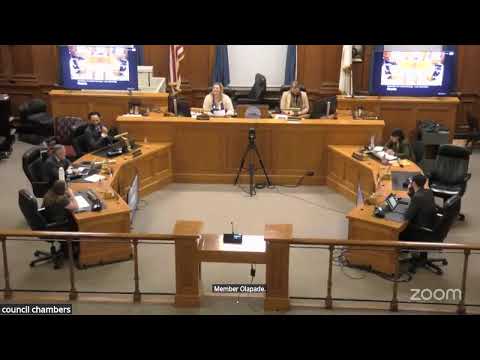
The motion to approve Basic's recommendations as presented was moved by Member Olapade, seconded by Member Parks, and passed on a roll call vote: 7 in favor, 0 opposed.
Next steps: the district will post job descriptions, proceed with the hiring process for the managing director and the recommended site‑level positions, finalize the registration and waitlist timeline, and begin professional development and implementation work during the coming months.