Get Full Government Meeting Transcripts, Videos, & Alerts Forever!
Get email alerts on the Gilead Campus topic
No spam. Unsubscribe anytime.
Foster City planners say Gilead campus addendum finds no new significant environmental impacts; staff outlines traffic and fiscal conditions
Summary
City staff presented a second addendum to the certified Cheshatch EIR for Gilead’s proposed expansion (up to 800,000 sq. ft. of R&D) and reported no new or substantially greater environmental impacts; staff also said the project would add roughly $1.7M–$2.2M in annual property tax revenue and recommended transportation demand measures and signal timing work to limit traffic impacts.
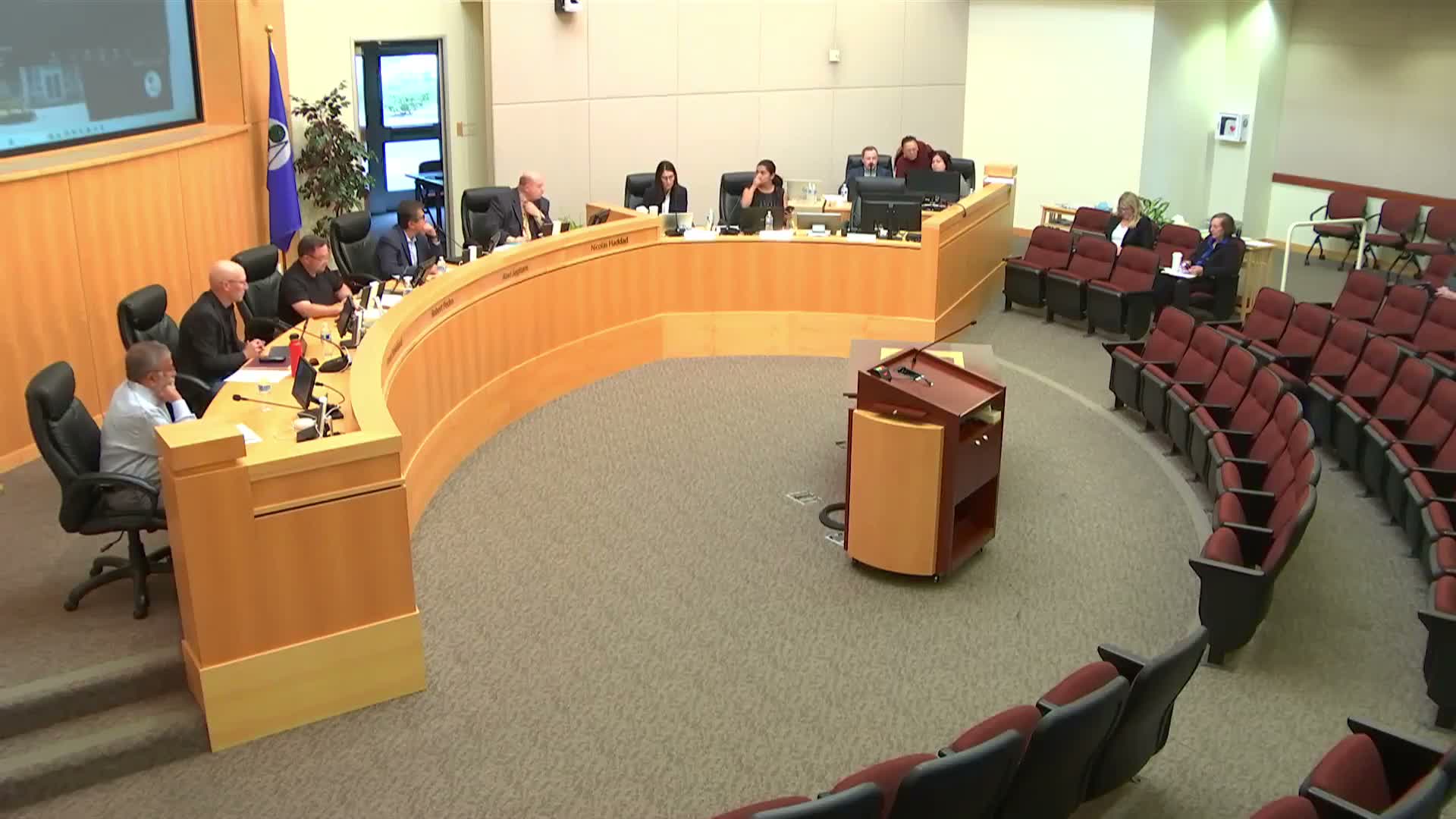
City planning staff told the Foster City Planning Commission on April 23 that a second addendum to the Cheshatch master plan environmental impact report (EIR) finds no new or substantially greater environmental impacts from the proposed Gilead campus expansion. The project would allow up to 800,000 square feet of research and development uses on an approximately 11.87‑acre site in the Chest Drive/Hatch Drive area.
Myra Blanco, senior planner in the community development department, said the addendum reviews the certified 2009 Cheshatch master plan EIR under the CEQA addendum criteria and applies the appendix G resource checklist from the 2025 CEQA guidelines. "Overall, based on the findings, there are no new or substantially greater impacts than those identified in the certified EIR," Blanco told the commission, noting that prior mitigation measures for aesthetics, air quality, hazards and transportation were carried forward.
Why it matters: staff concluded that under SB 743’s VMT metric the project would have a less‑than‑significant transportation impact for phase 1 after applying a project‑specific transportation demand management (TDM) plan. The analysis found a project‑adjusted VMT of 12.43 per employee, below the interim threshold used in the report (about 13.09 per employee), and staff recommended conditions such as TDM implementation and a requirement that Gilead reimburse the city for any signal‑timing work.
"Those signal modifications would be reimbursed by the developer," Ryan Marquez, senior civil engineer in Public Works, said in response to a commissioner question about changes to signal timing. "We will run a simulation to confirm there are no downstream or upstream impacts from the minor timing changes proposed for phase 1."
On fiscal effects, Blanco said the updated fiscal impact analysis — which compares the proposed R&D use to the site’s current taxable value — estimates that phase 1 redevelopment would yield about $289 million in assessed value and that the project at full buildout could generate approximately $1.7 million to $2.2 million annually in general‑fund property tax revenue and about $170,000 annually in property tax in lieu of vehicle license fee revenue.
Commissioners pressed staff on several technical points: Commissioner Haddad asked about site hazards and a reported net increase in water demand of 42.6 acre‑feet per year; Blanco and Public Works staff said hazardous‑materials risks are addressed through contingency testing, asbestos surveys and an emergency preparedness plan, and that water‑demand shortfalls could be met with on‑ or off‑site water‑savings measures, including measures Gilead has already banked on its main campus.
Blanco also reminded the commission of the project timeline: staff will schedule the entitlements for a planning commission hearing (including the second addendum and related use permits), then present any final EIR and mitigation/monitoring program to the city council. "If there are no outstanding concerns from the commission, we'll schedule this item for public hearing," Blanco said.
The commission did not take a formal vote at the April 23 study session; staff left the record open for follow‑up questions and said the next steps include a planning commission hearing followed by city council consideration of the final EIR and mitigation program.