Get Full Government Meeting Transcripts, Videos, & Alerts Forever!
Get email alerts on the Immigration Enforcement topic
No spam. Unsubscribe anytime.
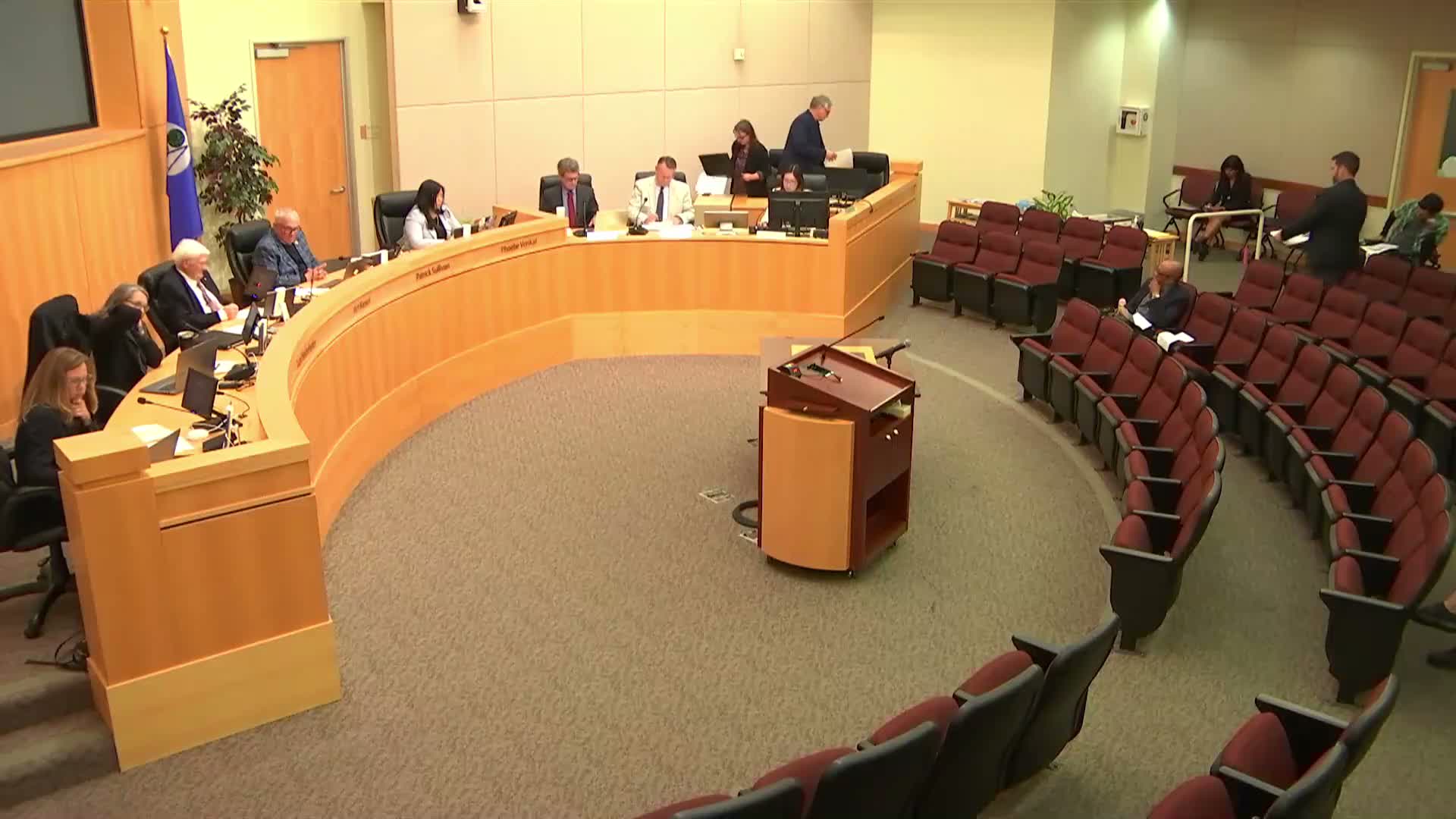
Foster City council adopts resolution restricting federal immigration enforcement on city property
Summary
The Foster City council voted April 20 to adopt a resolution clarifying that city facilities should not be used for federal civil immigration enforcement and directing the city manager to notify the public if enforcement actions occur on city property. Supporters said the move protects vulnerable residents; some council members pressed for safety and implementation details.
The Foster City City Council adopted a resolution on April 20 aimed at preventing federal civil immigration enforcement from using city‑owned property and facilities without complying with state law. Councilmembers voted in favor after staff described the measure as a clarification of existing state statutes and local policy, with the city manager or a designee assigned to notify staff and the public if enforcement activity occurs on city property.
Council staff framed the resolution as an informational and notification mechanism rather than a change in substantive law. The staff presenter said the measure aligns with state law (cited in the staff presentation as SB805 and SB54) and relies primarily on administrative steps: city staff would document incidents, alert the public, and post notifications rather than task local law enforcement with confronting federal agents.
Public commenters urged passage. Jim Lawrence, a Foster City resident, said the resolution “draws that clear and appropriate boundary” and framed it as a statement about the city’s values. Sarah Matlin, who said a friend had been interrogated by immigration authorities, asked the council to protect residents who fear engaging in daily activities. Community advocate Talima Soakadin said her organization’s door‑knocking documented an uptick in county‑wide detentions and characterized the resolution as a tool to reduce fear and isolation among immigrants.
Council members discussed practical concerns about implementation and safety. One councilmember asked whether publicly notifying the community could inadvertently prompt confrontations or place residents at risk; staff said the city manager role was intended to limit police involvement and to centralize administrative notifications. Staff also reported they had coordinated draft language with the police department and with legal counsel.
A motion to adopt the resolution was offered and seconded; the council voted to approve the resolution. The measure directs the city manager (or designee) to document and notify city staff and the public if federal immigration officials use city property for enforcement, and to require off‑duty or plainclothes officers to display identification consistent with state law when performing enforcement duties on public property.
The resolution’s immediate effect is procedural and communicative: staff described it as clarifying and memorializing policy and authorizing public notifications rather than creating new criminal penalties or changing how federal authorities exercise their jurisdiction. Council members said they would monitor implementation and staff training going forward.