Get Full Government Meeting Transcripts, Videos, & Alerts Forever!
Get email alerts on the Fiscal Management topic
No spam. Unsubscribe anytime.
City staff outline two-stage plan to defease 2015 successor-agency bonds, citing long-term savings
Summary
Finance staff and consultant proposed using residual redevelopment trust revenues to defease about $9.6 million of 2015 tax-allocation refunding bonds in two phases (June 2026 and January 2027), producing a projected collective savings of about $1.2 million and an estimated $7.6 million net benefit to the city through 2033 after a temporary revenue reduction.
The East Palo Alto finance director and the city's financial adviser told the city council that the successor agency's remaining 2015 tax-allocation refunding bonds could be retired through a cash defeasance carried out in two phases. Finance Director Tom Ooku said the bonds have roughly $9.6 million outstanding and that early defeasance would return redevelopment residual revenues to the general property-tax system sooner.
Jaime Trejo of PEFM, the city's financial adviser, said the plan would use about $4.9 million of residual RPTTF revenue for a June 2026 partial defeasance and about $3.6 million in January 2027 for the final defeasance. Trejo said the shift would generate roughly $1.2 million in near-term net savings to overlapping taxing entities and an estimated net fiscal benefit of about $7.6 million to the city through 2033, after accounting for a temporary reduction in general-fund revenue of roughly $3 million in FY25-26 and FY26-27.
Council members asked whether the $7.6 million represented a net-present-value calculation; Trejo said the figure represents nominal flows rather than a discounted NPV. Staff said the county oversight board has already given preliminary direction and that the county must amend the ROPS (Recognized Obligation Payment Schedule) to allow the accelerated defeasance. The presenters said the proposal requires sequential approvals by the city, the county oversight board and the state, and that any delay could push back distributions by roughly six months.
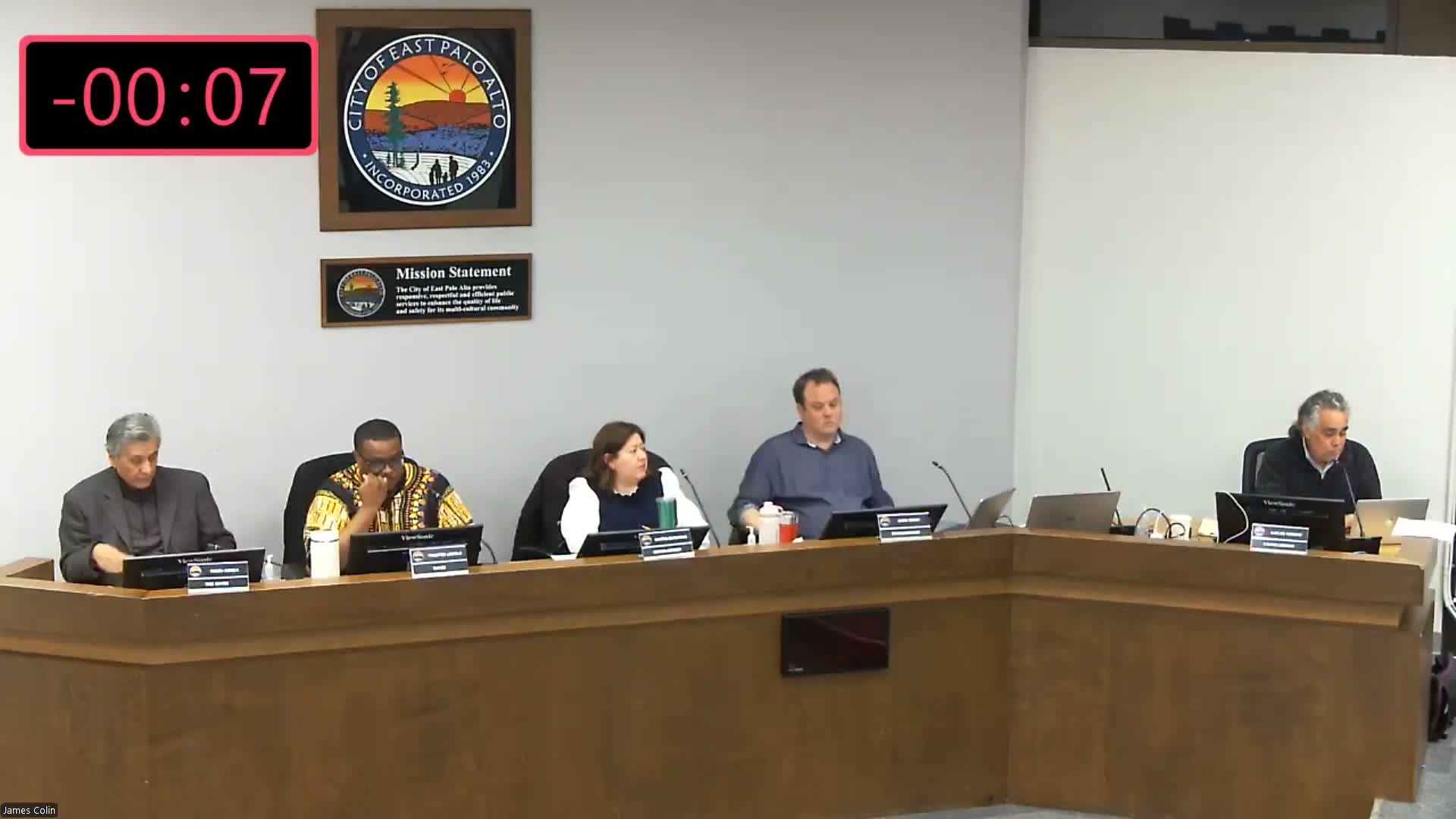
Council action: following questions from members and no public request to speak on the item, a councilmember moved and the council adopted a resolution authorizing staff to proceed with the defeasance process and related steps consistent with the staff report. The motion was adopted by the council on voice vote and recorded as adopted in the meeting minutes.
What happens next: staff will return to the council with any final documentation and will coordinate required actions with the county oversight board and other agencies. The schedule presented by the city anticipates first defeasance in June 2026 and completion by January 2027, subject to oversight-board and state approvals.