Get Full Government Meeting Transcripts, Videos, & Alerts Forever!
Get email alerts on the Surveillance Cameras topic
No spam. Unsubscribe anytime.
Foster City council approves eight more Flock ALPR cameras after privacy questions
Summary
Foster City authorized eight additional automatic license plate readers from Flock Safety after staff described camera siting, retention (30 days) and access controls; residents raised privacy concerns and urged tighter controls and audits.
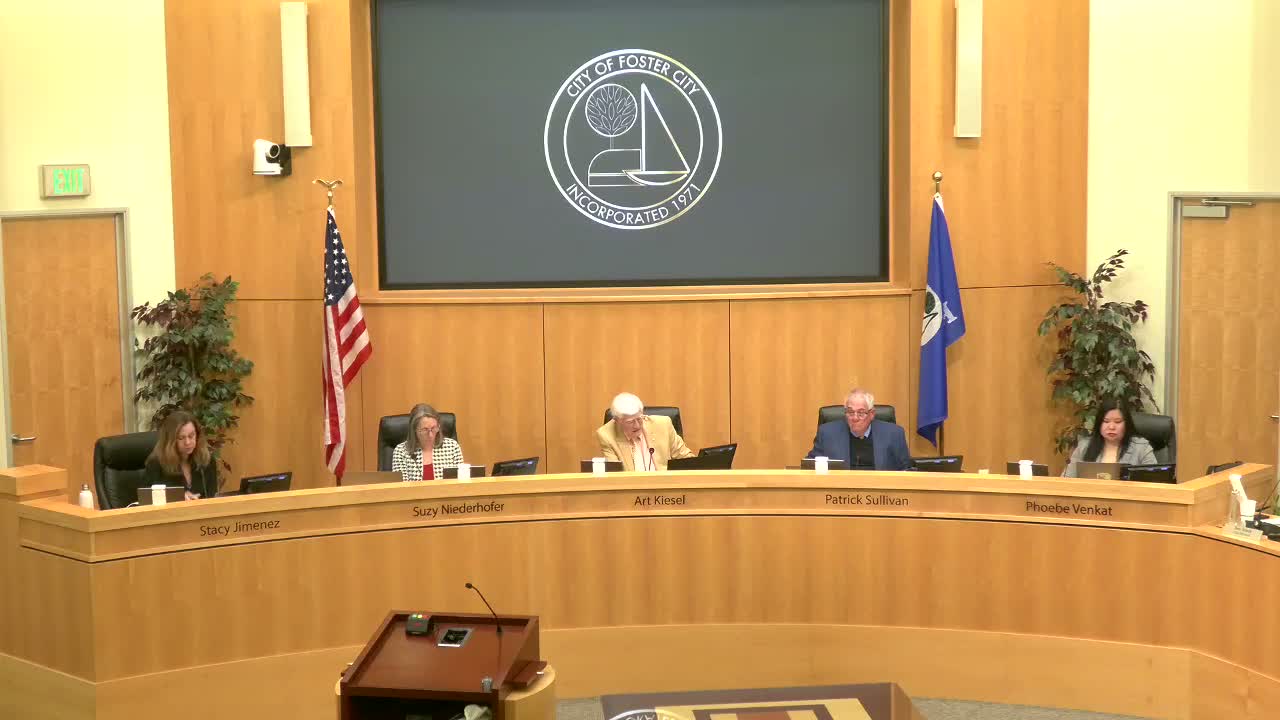
Foster City’s City Council voted to authorize the mayor to sign a contract with Flock Safety LLC to install eight additional automatic license plate readers (ALPRs), with staff and a Flock representative describing where the cameras would be sited and how the data would be handled.
The council action approved a resolution authorizing the procurement and a $24,000 annual service commitment tied to the expanded camera footprint. Police staff said the new cameras are intended to fill interior gaps in the city’s coverage and “direct our officers into the appropriate vicinity to hopefully locate the vehicle,” the police chief said during the discussion.
Why it matters: Councilmembers and residents pressed for specifics about retention, legal access and software controls after recent news about disputes in other Bay Area cities. The council’s decision expands a surveillance footprint that the police say has helped solve crimes, while some residents said the risks to privacy and civil liberties remain.
How the system works: The chief told the council that the cameras capture vehicle characteristics and license plate information and that “nothing is done with that information unless it is searched for.” Flock’s public affairs manager, Lily Ho, said searches typically occur only when a vehicle is suspected to be involved in a crime and that records can require a case number or search reason; she added that Foster City’s policy requires outside agencies to sign a data-access acknowledgment before they may search the system.
Public concerns: Two in-person commenters said the city should be cautious. “I’m all for public safety... but I don’t think this is about public safety,” Pablo told the council, adding he feared the tools could be misused against vulnerable groups. A second speaker said she agreed and urged the council to consider alternatives to spending on surveillance.
Council safeguards and follow-up: Councilmembers asked whether the city can deny access even to agencies that sign the acknowledgment; the police chief said the city retains full control and can remove access at any time. Staff said the department conducts internal audits every six months and an external audit annually. Councilmember Phoebe Venkat urged staff to monitor Flock’s security posture and change-log capabilities in light of incidents elsewhere.
Outcome and next steps: After discussion and public comment, the council approved the resolution directing the mayor to execute the agreement with Flock Safety. Council members asked staff to continue periodic reviews of access, retention practices and vendor change logs.