Get Full Government Meeting Transcripts, Videos, & Alerts Forever!
Get email alerts on the Audience Q And A topic
No spam. Unsubscribe anytime.
Audience presses panel on wealth redistribution, employer absence and housing access
Summary
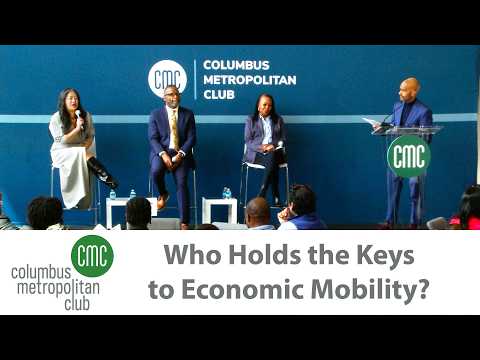
During audience Q&A at the Columbus Metro Club forum, attendees pressed panelists on how to finance nonprofit programs, whether wealth redistribution (estate tax) should be used, the absence of employer representation and how to overcome nimbyism to expand housing access. Panelists urged private fundraising, civic engagement and mixed-income strategies.
Audience members at the Columbus Metro Club forum asked panelists concrete questions about entrepreneurship pathways, the absence of employer voices on the stage, wealth redistribution and housing access.
Elizabeth Wangugi Etienne, a small-business owner, asked how leaders are preparing youth to innovate rather than only train for wage jobs; panelists pointed to entrepreneurship education, mentorship and experiential programs. Laura Fish, with Fish Talent LLC, said she had observed ‘‘no representation from a business as an employer on this stage today’’ and urged stronger employer engagement in workforce conversations.
An audience question to Dr. Joyce Chen asked whether she considered herself a proponent of wealth redistribution. Chen said yes and pointed to existing tax mechanisms: in her words, the estate tax ‘‘does some of this wealth distribution’’ and can blunt the persistence of generational wealth so capital recirculates to new entrepreneurs. Panelists and audience members discussed private fundraising and voting as complementary tools to restore support for community organizations facing defunding.
Amy Claben, president of Families Flourish, raised housing access and zoning changes to create mixed-income communities; Hightower and others identified nimbyism and politics as persistent barriers and urged partnerships with private landlords and mixed-income models. The panel noted that stabilizing housing and building mixed-income neighborhoods are central to broader efforts to expand opportunity.
Panelists repeatedly pointed to three practical levers: (1) programs that pair skills training with supportive services (stipends, childcare, transportation); (2) stronger employer partnerships to define and prepare talent pipelines; and (3) civic engagement — voting and advocacy — to sustain funding and policy changes. No formal commitments were made at the forum; panelists instead urged listeners to support local programs and engage in policy and fundraising efforts.
The audience session illustrated local appetite for employer involvement and clearer funding strategies for nonprofits and housing initiatives, and it reinforced the panel’s broader argument that both community programs and public policy have roles to play in promoting economic mobility.