Get Full Government Meeting Transcripts, Videos, & Alerts Forever!
Get email alerts on the Alpr Flock Contract topic
No spam. Unsubscribe anytime.
East Palo Alto delays vote on Flock ALPR after hours of public protest; staff says contract negotiations continue
Summary
After extended public comment urging cancellation of the city’s Flock ALPR system, councilmembers voted to remove item 14.1 from tonight’s agenda. Police presented a quarterly ALPR report citing multiple investigations aided by Flock; staff said Flock has agreed to contract language barring AI training on city data and staff is proposing a shorter term while negotiation continues.
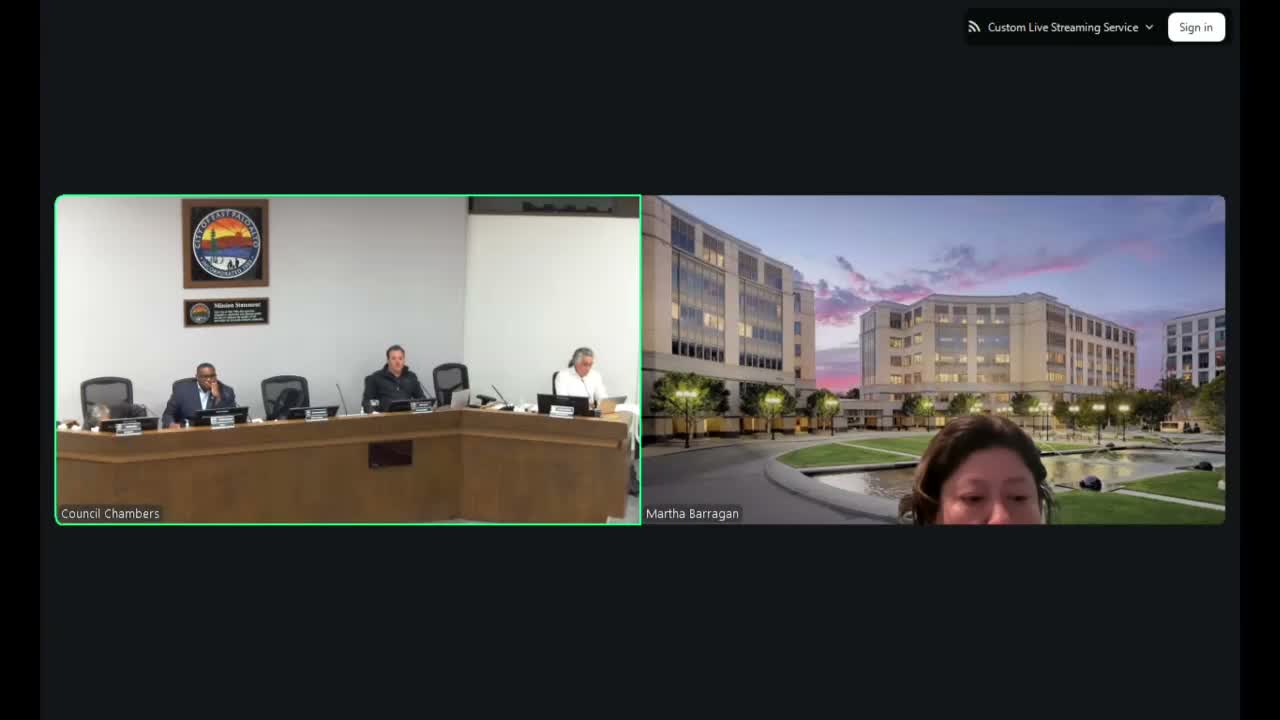
East Palo Alto’s City Council pushed a decision on its Flock automated license‑plate reader (ALPR) program to a future meeting on Tuesday after more than two hours of public comment and questions from councilmembers.
Mayor Lincoln and two councilmembers voted in favor of approving the meeting agenda without item 14.1 — the Flock contract — after debate over whether removing the topic from tonight’s calendar denied residents an opportunity to speak. The motion carried, leaving the contract “in limbo” but ensuring the issue will return to a future agenda, Vice Mayor (name on record) said.
Members of the public filled much of the meeting to urge termination or suspension of the contract. A widely repeated concern was that ALPR systems have been misused or improperly shared with federal immigration authorities in other Bay Area jurisdictions. “We will push for the cancellation of this contract and we will succeed,” one speaker representing community organizers said during public comment.
Police staff and the department’s Flock administrator delivered a quarterly report that outlined recent cases in which ALPR data was used to track stolen vehicles, identify suspects across jurisdictions, and locate a missing elderly resident. “Without the use of FLoC in this case, we would not have been able to put all this together and probably not have arrested several of these suspects,” the police presentation said, citing a late‑December–January robbery and vehicle‑theft spree tracked across multiple cities.
Staff also described safeguards: the department maintains a public transparency portal with monthly audit logs, enforces a 30‑day retention policy for ALPR data, and said it manually vets requests to share East Palo Alto data with outside agencies. During the briefing, the ALPR administrator said Flock had agreed to add contract language — modeled after language used in Oakland — that would prohibit the company from using city data to train its machine‑learning systems. “It’s in the current contract,” the administrator said.
Councilmembers pressed staff for specifics about who has access to shared data, whether other agencies must meet the same search requirements, and exactly how termination rights would work. City staff said they had authority to negotiate a three‑year contract but are proposing a one‑year term to preserve the council’s flexibility to terminate without paying large penalties. One councilmember said that clarification is necessary because previous approvals were premised on the ability to end the relationship without excessive cost.
The removal of item 14.1 did not stop speakers from delivering public comments on the topic; many said removing the item from tonight’s agenda was undemocratic and vowed to return. Police leaders and some councilmembers pushed back, saying ALPRs have demonstrable law‑enforcement utility and that stricter contract language and auditing reduce risk.
Next steps: the vice mayor said she would place the item back on a future agenda so the council can reconcile concerns about data sharing, termination terms, and contract length. Staff described ongoing contract negotiations with Flock and recommended the council consider any proposed contract amendments and the city attorney’s advice at the next hearing.