Get Full Government Meeting Transcripts, Videos, & Alerts Forever!
Get email alerts on the Cemetery Policy topic
No spam. Unsubscribe anytime.
Commission tightens cemetery transfer rules, raises plot and service fees and sets enforcement plan
Summary
The commission moved to limit future cemetery transfers to immediate family, require resale to the city (with buyback provisions), and approved fee increases (plots to $2,500; increased opening/closing fees) while directing staff to notify lot owners and allow a 60‑day voluntary compliance period before enforcement.
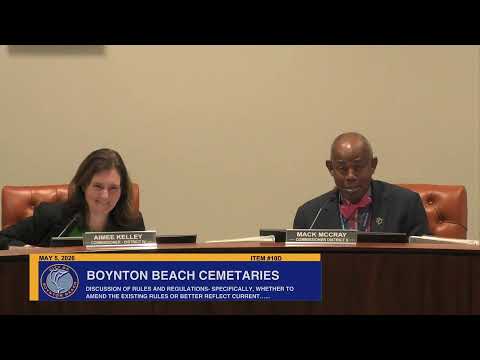
The commission approved a package of cemetery policy and fee changes May 5 intended to limit speculation, preserve plots for residents and improve maintenance at Boynton Beach Memorial Park and Sarasin Cemetery.
Public Works Director Kevin Ramsey explained the proposed ordinance would limit transfer or conveyance of lots sold on or after the ordinance’s effective date to immediate family members, prohibit private resale to third parties and require relinquished lots to be conveyed back to the city subject to buyback provisions. Ramsey said the city is trying "to keep it within the citizens of [the] City of Boynton Beach."
The commission approved the ordinance language (first reading) and then a resolution updating cemetery fees. Staff proposed raising available plot prices to $2,500 (to align with local market comparisons), increasing weekday opening/closing fees from $400 to $600 and raising weekend/holiday opening/closing from $500 to $800, plus increases to equipment/setup and infant interment fees. Commissioners debated whether increases should be phased but approved the resolution.
Commissioners also discussed past abuses in which private purchasers subdivided plots and sold them for profit. Assistant City Attorney and staff recounted at least one instance where an outside company bought mausoleum lots and subdivided them for resale; commissioners asked staff to explore whether privately held plots might be repurchased for public use.
On enforcement, staff proposed mailing and electronic notices to lot owners and family members of record, providing a 60‑day voluntary compliance period to remove prohibited plantings or structures, and then moving to strict enforcement. Commissioners emphasized sensitive outreach — making personal contact where families appear to visit regularly, translating notices (including Creole) and using tape‑off and community forums as interim measures before physical removal.
Next steps: staff will implement outreach, begin the 60‑day voluntary compliance period, return with buyback and CIP implications as needed, and place enforcement actions on a schedule after the grace period.