Get Full Government Meeting Transcripts, Videos, & Alerts Forever!
Get email alerts on the District Reconfiguration Values topic
No spam. Unsubscribe anytime.
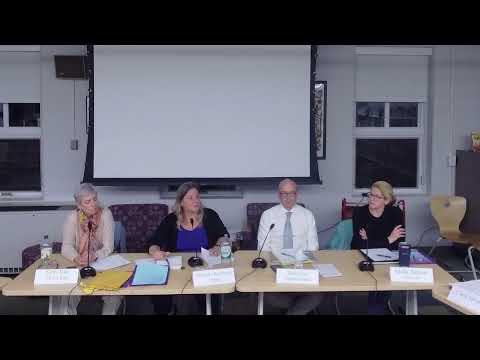
RSU 5 board prioritizes instructional quality and financial sustainability in values workshop, debate over town identity and early childhood
Summary
At a public workshop the RSU 5 board prioritized quality of educational programming and financial sustainability, with members and residents debating town identity, transportation impacts for preschoolers with IEPs, and how community input will be incorporated into a district reconfiguration study.
The RSU 5 board spent more than an hour Wednesday rating and discussing a list of district values intended to guide a possible reconfiguration study and future decisions about attendance areas.
Facilitated by district staff, board members independently weighted a set of values and then shared their top three. Quality of educational programming emerged most frequently as a top priority, followed by financial sustainability, student educational equity and transparency/community trust.
The exercise was framed as a conversation starter, not a vote. The facilitator said the point was to identify competing values and better understand how board members would weigh them during future decisions. "This is a discussion about values; you're not voting on anything tonight," the facilitator said.
The public and board members used the workshop to highlight points the facilitator said would feed into a forthcoming study. Several public commenters and board members urged that attendance-area criteria be explicitly considered; Pownall resident Mark Doley referenced the RSU 5 formation documents and Maine Department of Education guidance (Section 13) and urged the board to include attendance-area factors such as busing and student belonging in any evaluation. "When reviewing the 2008 RSU 5 formation documents from the Maine DOE, Section 13 provides guidance for establishing attendance areas," Doley said.
Discussion turned to early childhood services and transportation. Public commenter Matt Altery warned that some reconfiguration scenarios would add roughly 25–30 minutes of daily bus time for 3–4 year-olds with IEPs, a change he said could harm students who need short, supervised travel. The superintendent responded that students with IEPs would be prioritized for services and that transportation required by an IEP would be provided; other transportation arrangements would depend on program structure and availability.
Board members debated tensions among values: some said town identity and minimizing disruption to families should be heavily weighted; others said financial and instructional concerns must take precedence. Several members noted the limitations of a 13‑item worksheet and asked staff to tabulate and return combined results.
The board also handled routine business during the meeting. The chair moved to accept a slate of personnel nominations and authorize the superintendent to issue contracts for the 2026–27 school year; the motion was approved by voice vote and the chair noted that a member (Karen) was absent. The transcript does not include a numeric roll-call tally for that vote. Later the board voted unanimously to enter executive session under 1 MRSA §405(6)(A) to discuss the superintendent's evaluation.
District staff said an RFP for a reconfiguration study has been posted and that the study team will be asked to include community engagement in both its analysis and its recommendations. Board members and public commenters said they want results and cost estimates returned well in advance of the next budget cycle so values can be weighed against concrete financial data.
Next steps: staff will tabulate the weighted-values worksheets and share aggregated results with the board and public; the reconfiguration study (RFP posted) will gather community input and return recommendations that incorporate that feedback. The board scheduled a short meeting before the annual budget meeting and will incorporate study outputs into future budget discussions.