Get Full Government Meeting Transcripts, Videos, & Alerts Forever!
Get email alerts on the Student Voice Communication topic
No spam. Unsubscribe anytime.
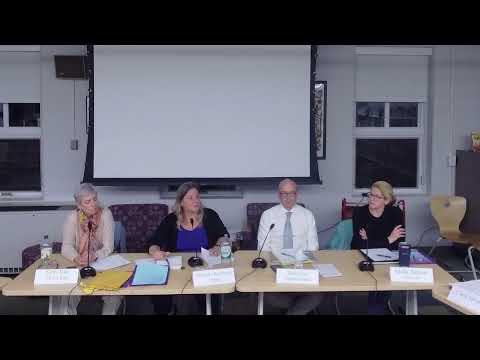
Freeport student leaders tell RSU 5 board students feel unheard, urge clearer communication
Summary
Freeport High School's student leadership team presented a year of student conversations and recommended concrete steps — opening supervised informal spaces and clearer channels — to ensure students see tangible results from their feedback.
Freeport High School's student leadership team told the RSU 5 board on Wednesday that many students feel disconnected from peers, teachers and administrators and urged the district to make changes that show student feedback produces visible results.
The presentation, delivered by student board representative Moon Gattu and fellow student leaders Mira Goldman, Annie Shelkem, Jaden Stultz, Eleanor Williamson and Gracelyn Hill, summarized a year-long process of conversations, coding and analysis using the Cortico platform. "Students feel their opinions are not taken into account by admin," Gattu said, arguing that a perception of inaction discourages further participation.
The students described a three-part research process: convening broad student groups, developing a conversation guide with an outside researcher, and uploading conversations to Cortico for thematic coding. They said the most consistent themes were (1) desire for more informal opportunities to interact without pressure, (2) a preference for less-formal teacher-student communication channels than email, and (3) confusion about where decisions originate and who to contact.
As possible action steps, students suggested opening supervised, informal physical spaces such as the FPAC lobby and select alcoves during advisory or free periods; piloting less-formal teacher contact options (for example, monitored chat or announcement channels); and creating a clear, student-facing outline that documents what the board heard from students and what the district did in response. "If we share what happened with what they said, that would be really helpful," one presenter said.
Board members responded with praise and questions about logistics. One member suggested inviting more teachers to volunteer supervision time during advisory; another said the district has funded work with Jennifer Chase and researchers at the Center for Collaborative Communication at MIT to support the students' data coding and methodology. The superintendent noted the district will share the tabulated results and asked the student team to help design student-friendly formats for reporting outcomes.
The board and public commenters repeatedly commended the students' work. "You are all leaders," a committee member said. Public commenters including Taylor Steele and Matt Altery encouraged the board to use student leaders as partners in community engagement and middle-school-to-high-school transition work.
The board asked staff to collect the student team's materials and to consider the team's recommendations when designing communication strategies and supervisory plans. No formal board action was taken on the presentation; it was received for information and will inform future outreach and planning.
The next procedural step is for district staff to tabulate the workshop results and return a themes report to the board, and for the student leadership team to work with staff on formats that make outcomes visible to the broader student body.