Get Full Government Meeting Transcripts, Videos, & Alerts Forever!
Get email alerts on the Speed Limits topic
No spam. Unsubscribe anytime.
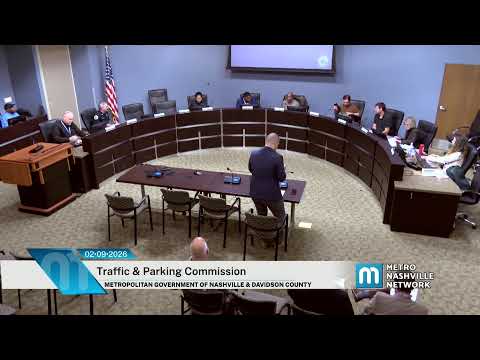
Traffic & Parking Commission lowers Haywood Lane speed limit to 35 mph and asks NDOT for quick‑build safety measures
Summary
After hearing Vision 0 testimony and technical evidence from NDOT, the commission voted to lower Haywood Lane's speed limit from 40 to 35 mph, asked NDOT to pursue short‑term quick‑build mitigations (rumble strips, radar feedback, raised pavement markers) and required a six‑month follow up on outcomes.
The Traffic & Parking Commission voted to reduce the posted speed limit on Haywood Lane from 40 to 35 miles per hour after hearing engineering analysis from NDOT and testimony from Vision 0 advocates.
"When a pedestrian is struck at 35 miles an hour, roughly 7 out of 10 times that person will die, but when a person is struck at 30 miles an hour that drops to about 4 out of every 10 times," Robin Owen, a Vision 0 advisory committee member and Haywood resident, told the commission, urging a 30 mph limit.
NDOT's Andrew Smith presented the technical basis for the department's recommendation: tube counts and an NCHRP tool analysis that, in NDOT's calculation of corridor context and percentile speeds, produced a 35 mph recommendation (the 50th percentile speed was reported as 37 mph at the study location). Commissioners pressed staff for the underlying tube‑study locations, crash mapping, and the tool inputs that would be required to show a lower recommended limit.
Commissioners and NDOT staff emphasized that a posted speed reduction is only one part of a safety strategy. Brad Fries (NDOT deputy director) and Val Martinez (Vision 0 coordinator) described short‑term or "quick‑build" mitigation options the department plans to deploy around the corridor: raised pavement markers, speed radar feedback signs, rumble strips, turn‑hardening/delineation at intersections and other measures intended to reduce speed and improve pedestrian crossing conditions.
Several commissioners said they were inclined toward a more aggressive posted reduction but recognized the need to align posted speeds with measurable roadway characteristics and enforcement feasibility. The commission approved the 40→35 mph change and added an amendment asking NDOT to return in six months with performance data, the results of any quick‑build mitigations and any recommendations that would justify further reductions.
Why it matters: Haywood Lane is on the city's high‑injury network and commissioners cited a multi‑year crash history and recent pedestrian fatalities as the rationale for action. The commission's directive for quick builds and a six‑month review ties a modest immediate reduction to a broader safety strategy that could include more substantial infrastructure changes later.
Next steps: NDOT agreed to provide the commissioners with the NCHRP tool inputs and tube‑study locations, pursue the quick‑build mitigations discussed at the meeting and report back on speed and crash performance as directed.