Get Full Government Meeting Transcripts, Videos, & Alerts Forever!
Get email alerts on the Property Tax Reform topic
No spam. Unsubscribe anytime.
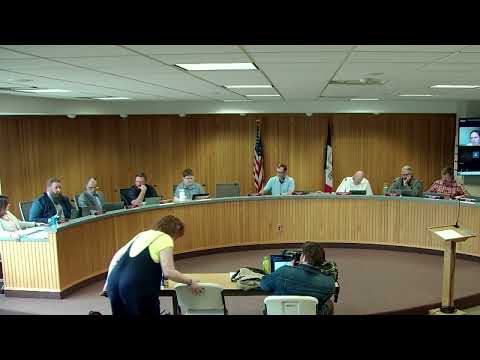
City manager says new state property tax package will cap local revenue and could force cuts
Summary
City Manager Travis told Decorah council that a new state law converting a homestead credit to an exemption and imposing a 2% cap on combined general fund levies will limit municipal revenue growth, may disincentivize use of TIF and tax abatements, and could require future cuts to programs or staff.
City Manager Travis told the Decorah City Council that legislation approved at the state level will impose a 2% cap on cities’ combined general fund levy and convert the existing homestead credit into a homestead exemption, which he said will materially limit the city’s ability to grow general‑fund revenue.
Travis described the homestead change as a 10% exemption of a property’s value with a minimum of $5,500 and a maximum of $20,000 of taxable value exempted, indexed to CPI, and said the policy moves money that previously supported city services toward school levies. He said the 2% levy cap applies to the combined general fund and that new construction valuation exclusions (TIF/abatement) are not counted as new valuation under the law, creating a disincentive to use those economic development tools.
"With that hard cap, cities ... are incentivized to grow, but now it becomes essentially an even worse Ponzi scheme where if you don't grow, you are limited to just your 2% cap," Travis said. He warned the change could lead to reductions in recurring programs, maintenance or staff over time if inflation exceeds the cap.
Travis said the law requires county auditors to deliver parcel‑level information to the Iowa Department of Management to allow modeling of local effects; he also noted the Iowa League of Cities taxpayer notice form was adopted to improve transparency.
Council members reacted strongly. One member urged the council to coordinate outreach with other municipalities to explain the impact to constituents and to oppose the changes; others pressed for clearer communications to residents about how modest household savings could translate into cuts to local services. Several council members requested staff provide more precise modeling at a future meeting.
No formal council action on the state law was taken at this meeting; council members asked staff for follow‑up analysis and suggested discussing the matter with peer cities and better informing constituents ahead of elections.