Get Full Government Meeting Transcripts, Videos, & Alerts Forever!
Get email alerts on the Sign Code Update topic
No spam. Unsubscribe anytime.
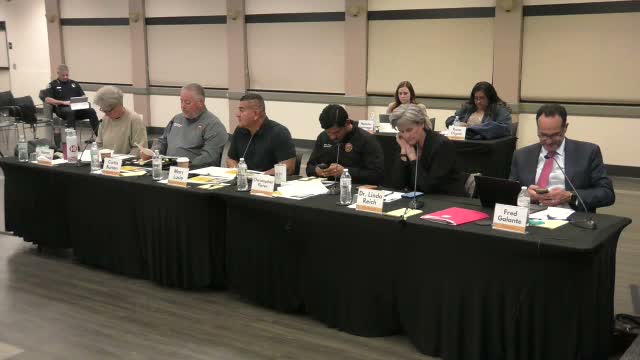
Chino study session moves to sign-code overhaul, electronic message signs, creative signage and mural program
Summary
Staff previewed a comprehensive sign-code update to comply with Reed v. Town of Gilbert, proposed expanded electronic message signs in large commercial corridors, a 'creative signs' route to allow branded permanent signage, and a city mural program with permitting and maintenance rules; councilors raised light-pollution, safety and First Amendment questions.
After reviewing the zoning-code update, staff presented an overview of a separate comprehensive sign-code update. Chris Cortez (assistant planner) and Andrea Gilbert (staff) said the code rewrite is meant to implement Reed v. Town of Gilbert (content neutrality), reformat the sign code to be user-friendly and add standards for previously unaddressed sign types.
Staff proposed three new categories: electronic message boards for larger commercial centers and select public corridors (examples discussed: Euclid Avenue and Central Avenue, and select park signage), a 'creative signs' category to permit permanent, branded or architectural signage that does not strictly meet current numeric standards (examples: theatre marquees or franchise artwork), and a murals program including permitting, maintenance and potential art-in-lieu fees. Staff said portable traveling electronic billboards (vehicle-mounted) would not be permitted.
Council members supported opportunities for economic development and community branding but raised concerns about light pollution, motorist distraction, limits on the number of electronic signs in a single area, and maintenance of temporary banners. Staff said electronic signs could be limited by zoning district, number-per-center limits, maximum luminance standards and potential development-agreement revenue models for freeway-facing conversions subject to Caltrans approval. On creative signs, staff proposed a tiered approval pathway: director-level approvals for minor creative signs and planning-commission review for major proposals; staff also discussed a possible staff committee and economic-development coordination to expedite approvals while preserving review safeguards.
On murals, staff proposed a program with permitting, guidelines, maintenance obligations and multiple paths (property-owner proposals, city-commissioned works and RFP-commissioned public art). The city attorney cautioned that murals present regulatory complexity because once a city authorizes murals, content and commercial-speech issues can raise legal questions; staff said they are researching precedents from nearby cities and plan outreach to businesses and artists.
Staff expects a sign-code draft to be released alongside the zoning-code update later this year for public review; no ordinance votes occurred at the study session.