Get Full Government Meeting Transcripts, Videos, & Alerts Forever!
Get email alerts on the Sewer Rates topic
No spam. Unsubscribe anytime.
Imperial Beach council receives sewer rate study, sets May 6 public hearing
Summary
City officials heard a sewer‑rate study showing Metro treatment costs as the main driver of increased charges, were presented with four rate scenarios, and set a public hearing on May 6, 2026, at 6 p.m. to consider possible rate adjustments.
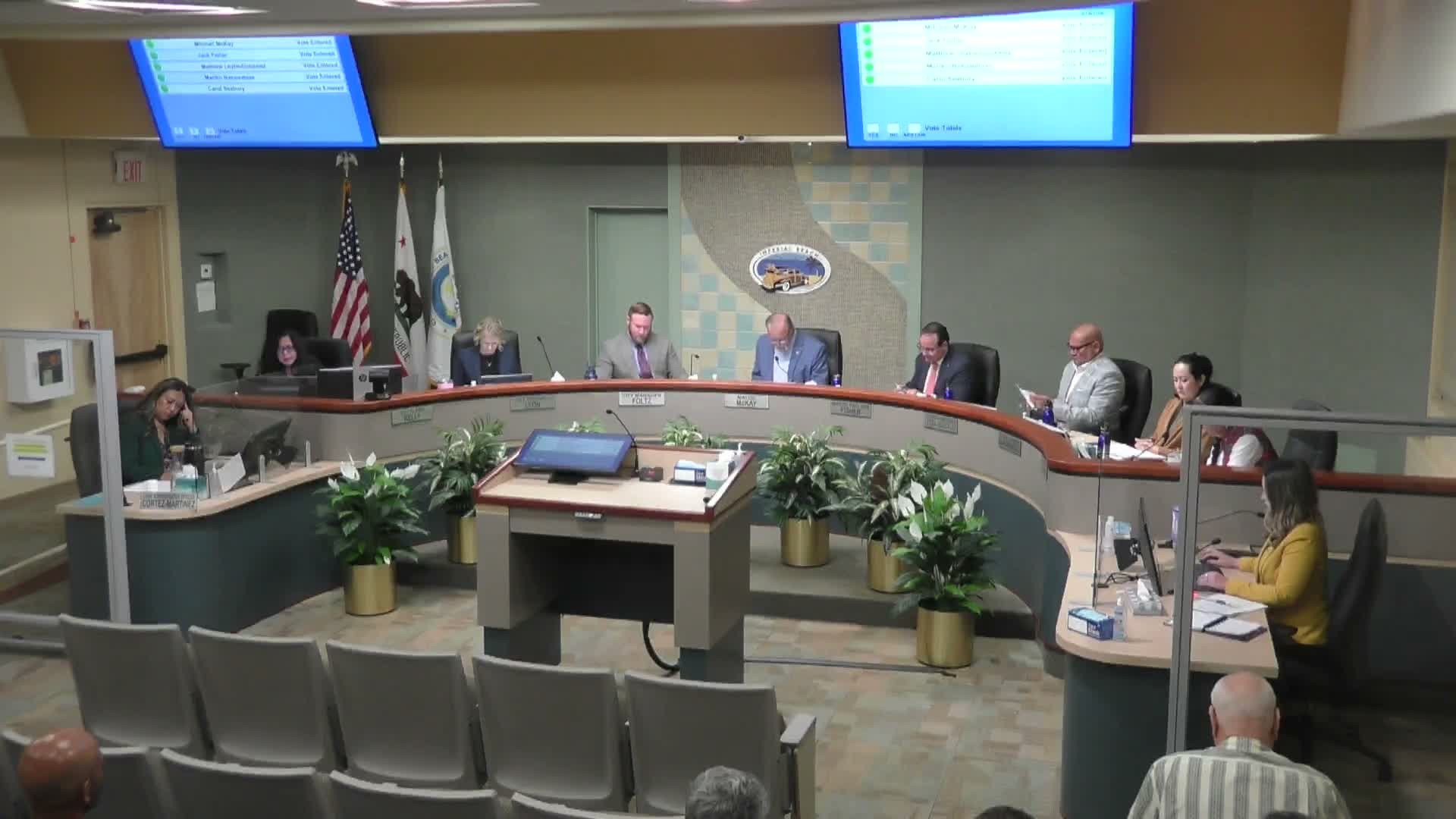
The Imperial Beach City Council received a sewer rate study on March 4 that warns Metro treatment cost increases and high wastewater infiltration will require higher charges or other changes to the city’s sewer revenue plan.
Carmen Kasner, the consultant who prepared the study, told the council that new rates must be set by July 1, 2026, to take effect in fiscal year 2027 and that San Diego Metro’s projected construction and treatment costs are the primary driver of the pressure on local rates. "New rates need to be updated by 07/01/2026 to be in effect for fiscal year 2027," Kasner said.
The study presented four options: a three‑year recovery path requiring roughly 16 percent, 15 percent and 15 percent increases in successive years; a five‑year phased approach that spreads increases over a longer period; a capped option (9.5 percent annually) that would leave the utility about $1.2 million short and materially reduce reserves; and a Metro pass‑through model that holds base rates steady while adjusting the commodity (flow) charge annually to reflect Metro costs. Kasner stressed that Metro numbers remain uncertain and that a Prop 218 notification will be required for any adopted increase.
Council members focused questions on infiltration and inflow from groundwater and private laterals, the timing of capital projects and reserve targets. Kasner and Public Works Director Juan Larios said much of the city’s elevated wastewater flows stems from high groundwater and private lateral failures, and that the city has several near‑term CIP projects, including Pump Station 8 and Station 1B, that could reduce infiltration when completed. Larios also described a low‑cost lateral insurance option the city plans to promote to residents; staff said informational letters will go out to property owners.
Council members asked about reserve levels and whether the lower‑increase options would keep the utility within legal requirements. Kasner replied that the conservative 9.5 percent cap would draw down reserves to levels she described as “on that ragged edge,” potentially leaving a smaller cushion against emergencies.
After discussion the council did not select a single option; instead, it directed staff to retain and refine the presented options, pursue outreach, and establish a Prop 218 notice and public hearing. The council set the required public hearing for May 6, 2026, at 6 p.m., when the council will consider possible adoption of new sewer rates.
The council’s packet will include the full rate‑setting scenarios and updated Metro numbers as they become available; staff said they will return with more detailed cost comparisons and outreach plans ahead of the May hearing.