Get Full Government Meeting Transcripts, Videos, & Alerts Forever!
Get email alerts on the School Start Times topic
No spam. Unsubscribe anytime.
Students, researchers press Ann Arbor board for study of later high‑school start times
Summary
Students and health experts urged the Ann Arbor Board of Education to commission a feasibility study on pushing high‑school start times to 8:30 a.m. or later, citing research on adolescent circadian biology, mental health and improved attendance and performance.
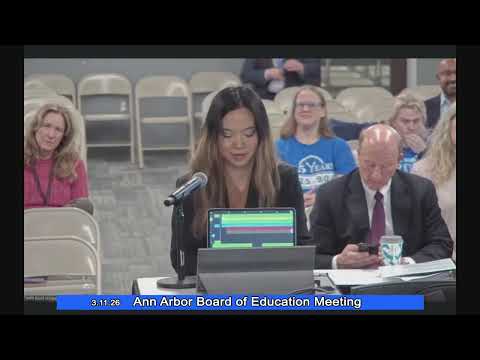
Students and local clinicians urged the Ann Arbor Board of Education to evaluate later high‑school start times at the public comment section of the board meeting.
“Elijah Marorrow, a student speaker, said he has ‘sent dozens of emails’ to administration asking for an evaluation and that community support is strong: ‘The science is there. The support is there. The means are there. So what is it? Why hasn’t this been done?’”
Students described practical impacts of the current schedule: older siblings unable to drive younger siblings to staggered start times, skipped breakfasts and very early lunches at 10:45 a.m. that undercut student nutrition, and missed school because of late bedtimes. P. Bergman, a junior at Pioneer, told trustees later start times could increase attendance and improve students’ ability to focus.
Health‑science speakers framed the request as an evidence‑based public‑health intervention. Dr. Sri John, who said he directs the Eisenberg Family Depression Center at the University of Michigan, told the board adolescent circadian phases shift later and that later start times correlate with improved mental‑health indicators. “Prevention works infinitely better than treatment,” he said, urging the board to consider systemic changes to increase sleep and reduce anxiety.
Dr. Louise O’Brien, a University of Michigan sleep‑medicine clinician at the meeting, described adolescent melatonin timing and linked insufficient sleep to poorer academic outcomes, mood symptoms and higher injury risk among athletes.
Board members asked practical questions about transportation and after‑school schedules. Trustees and staff repeatedly raised the need for a feasibility assessment to identify costs and operational barriers, and several trustees said they would welcome data to inform any policy decision.
What’s next: Student speakers explicitly requested that later start times be added as an agenda item and that the board undertake a formal evaluation of options. Several trustees asked staff to bring back data and cost estimates so the district and community can decide whether to proceed.