Get Full Government Meeting Transcripts, Videos, & Alerts Forever!
Get email alerts on the Facilities Auditorium topic
No spam. Unsubscribe anytime.
Community pushes back after draft facilities-use manual would standardize auditorium fees
Summary
Matthews County residents and long-standing arts groups urged the school board to revise a draft facilities-use manual that would standardize fees and custodial requirements for the Harry M. Ward auditorium, saying proposed increases and limits on long-term use could force community organizations out of the county.
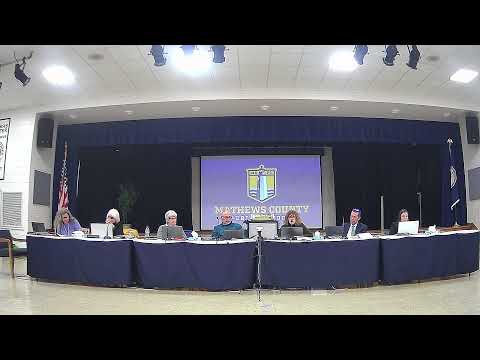
The Matthews County School Board heard more than an hour of public comment on March 17 after administration presented a draft Facilities Use Manual intended to standardize fees, custodial coverage and scheduling priority for school-owned facilities, including the Harry M. Ward auditorium.
Many longtime users of the auditorium told the board the draft, as written, would raise event costs dramatically and penalize groups that have used the facility for decades. "This document as written will not allow that whether it pushes us out because we are too regular of a user or because of fees so high that we couldn't begin to afford them," said Linda Smith, who identified herself as president and general manager of Virginia's Little Opera. Smith said custodial fees she was quoted for a show rose by $480 and that the new fee per show would be over $1,100 under the proposed schedule.
Speakers representing Courthouse Players, Concerts by the Bay and other volunteer arts organizations described intergenerational participation and summer camps that rely on affordable access to the school auditorium. "We are part of the community — that means we're part of the schools," said Molly Hoffman, who said Courthouse Players supplies many youth opportunities because the school system lacks a drama program.
District staff framed the manual as an effort to correct inconsistent historic practices — some organizations were charged flat fees while others paid hourly rates or were not charged at all — and to recover costs connected to deferred maintenance, utilities and custodial coverage. "The desire was to provide consistency and to make sure that resource is maintained and is appropriate for the next person who's coming in to use that whether it's the high school band or Dons or Courthouse Players," Dr. Daniel, the superintendent, said during his presentation.
Board members acknowledged community concerns and said they did not intend to bar community use. "I've not heard anyone say or indicate in any fashion that we want to stop the community from using it," Mr. Morgan said. But several members also said fees should cover the school division's costs so taxpayer funds are not diverted from education.
Speakers offered practical suggestions: some volunteered technical help for lighting and maintenance, others urged a phased fee change or prioritizing nonprofit community groups. Sean Jagger, president of Courthouse Players, offered to help replace worn lighting sockets and other small repairs.
The board did not vote on the manual. Dr. Daniel said the draft could be adjusted — for example, removing a cap on years of regular use, revising custodial requirements or modifying nonprofit/for-profit distinctions — and that staff would return with revisions after further discussion.
The board encouraged continued public input and scheduled follow-up discussions; administrators said additional detail on the manual and fee schedule would be brought back for board direction.