Get Full Government Meeting Transcripts, Videos, & Alerts Forever!
Get email alerts on the Planning Apr Housing topic
No spam. Unsubscribe anytime.
Planning commission forwards Foster City's 2025 APR and Housing APR to City Council, staff cites 73 units toward RHNA
Summary
The Planning Commission voted to recommend City Council accept the 2025 General Plan Annual Progress Report and the Housing Element APR. Staff reported 73 units credited to the RHNA cycle, described housing programs (rehab loans, ADU permits, Measure K grants), and outlined mid-cycle housing priorities for 2026.
The Foster City Planning Commission voted to forward the city's 2025 General Plan Annual Progress Report (APR) and Housing Element APR to the City Council for acceptance and to find the report exempt from the California Environmental Quality Act.
Planning staff presented highlights from the 2025 APR. "The APR provides an update on our community's progress from January 1 through December 31, 2025," said Helen Telford, senior planner. Telford summarized recent activity: large commercial applications including a 175,000-square-foot research-and-development proposal along Chest Drive, approval of a new R&D building at Gilead's campus, and permitting metrics for green building such as 101 solar permits and 35 EV charger permits in 2025.
On housing, staff noted several ongoing programs. Telford said the city issued 24 building permits for accessory dwelling units (ADUs) in 2025 (counted toward RHNA progress) and reported a total of 73 units credited to the current RHNA cycle. The city selected Habitat for Humanity Greater San Francisco to administer a homeowner rehabilitation loan program providing no-interest loans of $25,000 to $75,000 and construction services for up to 18 eligible low- and very-low-income homeowners. Staff also said the city received $35,000 from the county Measure K program for emergency rent relief and later secured an additional $20,000 to continue assistance.
Staff described three priority housing-element programs for 2026: HD1A (selection of opportunity sites and a mid-cycle RHNA review), HD2A (potential reuse of commercial sites, supported by an economic analysis from Cosmont Companies), and HD3A (amendments to the Planned Development chapter to remove constraints and encourage incentives for housing projects). "If additional sites are needed, staff will apply and bring recommendations to the commission and council," staff said.
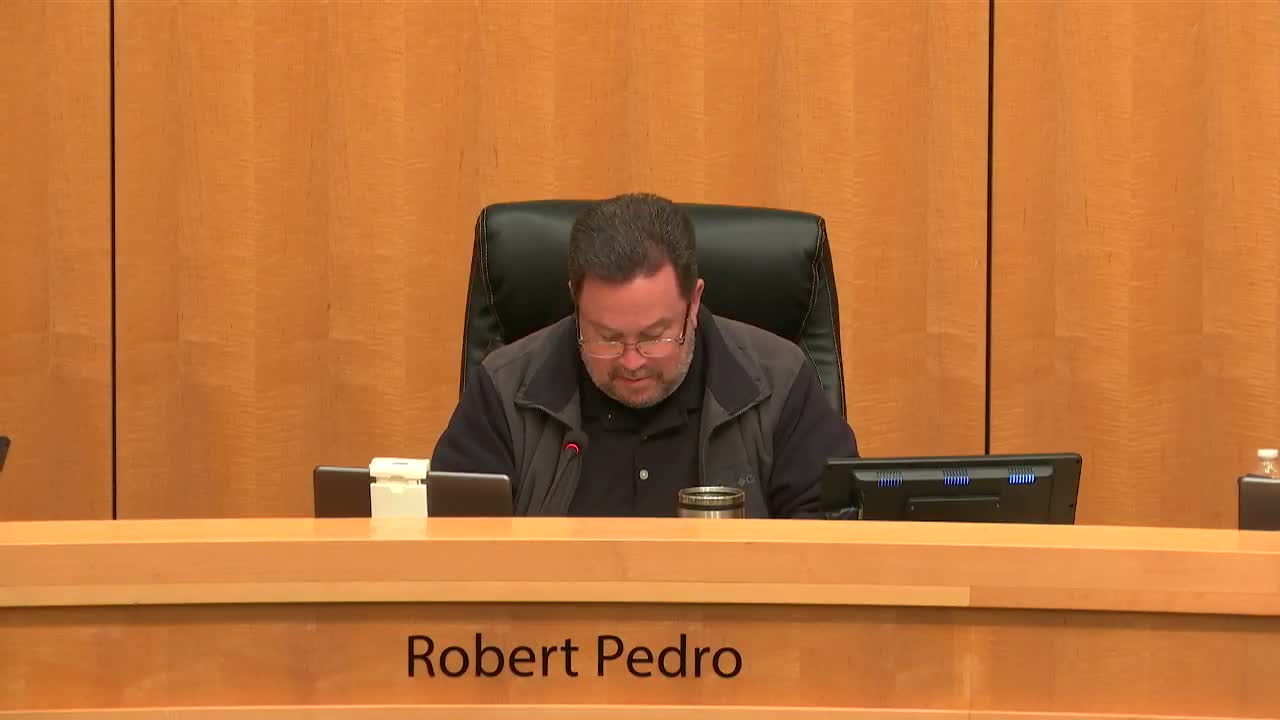
Commissioners asked about barriers to home electrification and resilience, including PG&E meter and service upgrades required for heat pumps and EV charging. Commissioner Jagtiani urged the city to press PG&E to speed meter upgrades and highlighted the cost and long lead times some homeowners face. Chair Pedro added that Foster City's underground utilities make service upgrades more expensive than jurisdictions with above‑ground lines.
Legal counsel said the city currently has a certified housing element, reducing the immediate risk of a builder's-remedy application. "The city has a certified housing element at this point, so we're not subject to builder's remedy applications," the assistant city attorney said, while noting HCD can rescind certification in extreme cases.
Motion and vote: Vice Chair Stovland moved and Chair Pedro seconded a resolution recommending City Council accept the General Plan APR and Housing Element APR and find the action exempt from CEQA; the roll-call vote carried with Commissioner Haddad absent.
Next steps: Staff will present the commission's recommended resolution to City Council on March 16 and then submit the APR to the state as required by April 1.