Get Full Government Meeting Transcripts, Videos, & Alerts Forever!
Get email alerts on the Special Use Permit topic
No spam. Unsubscribe anytime.
Commission approves horse‑boarding special‑use permit with 15‑year term after debate
Summary
After public hearing and deliberation, the county commission conditionally approved a special‑use permit for a horse‑boarding facility (DEB25121) and amended the planning commission recommendation from 10 to 15 years to accommodate the applicant's financing concerns; commissioners voted to approve with conditions drawn from staff and planning recommendations.
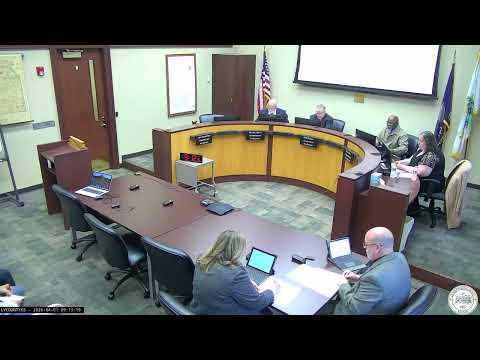
Leavenworth County commissioners voted on April 1, 2026, to conditionally approve a special‑use permit (DEB25121) for a proposed horse‑boarding facility at 20770 147th Street, setting the permit term at 15 years after extended discussion over the appropriate duration.
Staff outlined the proposal: a 40,000‑square‑foot structure with up to 55 stalls (55 stalls were noted in the application), indoor and outdoor arenas for lessons and client use, and a parking area sized to accommodate trucks and trailers. The planning commission reviewed the application at its March meeting, held a public hearing and recommended approval with recommended conditions and a 10‑year term.
Applicant representative Justin Watkins said the project represents a multi‑million‑dollar private investment and requested a longer permit term to allow sufficient time to repay construction loans. "It is a multi‑million‑dollar investment that we're doing and we took out a 30‑year loan on it," Watkins said, asking the board for flexibility on the term.
Commissioners debated staff policy changes that ended perpetual special‑use permits and discussed the planning commission's role in recommending time limits. Some members expressed concern that a 30‑year or indefinite term would limit the commission's ability to address future problems; others argued a longer term would help secure financing and show the county is open for business.
During deliberations the board substituted a 15‑year term for the planning commission's 10‑year recommendation by motion and second; the commission then conditionally approved the special‑use permit based on the planning commission's findings and the conditions in the staff report.
Why it matters: Special‑use permits change permitted uses on private property and can affect neighbors, traffic and local services. The commission's choice of a 15‑year term is a compromise between the planning commission's shorter recommendation and the applicant's request for a long amortization period, balancing investor certainty with opportunities for future review.
What the permit requires next: The resolution and staff conditions (as adopted by the planning commission and referenced by staff at the hearing) will be incorporated into the permit; the commission and staff noted applicants must comply with the listed conditions and return for any required follow‑up if issues arise.