Get Full Government Meeting Transcripts, Videos, & Alerts Forever!
Get email alerts on the Personnel topic
No spam. Unsubscribe anytime.
State designate approves personnel actions after staff hearings at Upshur County Schools
Summary
Under a state intervention, the West Virginia Department of Education’s designate heard staff pleas across music, pre‑K, technology, arts, athletics and alternative‑placement programs and said the acting state superintendent approved the proposed personnel actions. Employees warned cuts would jeopardize program continuity and compliance.
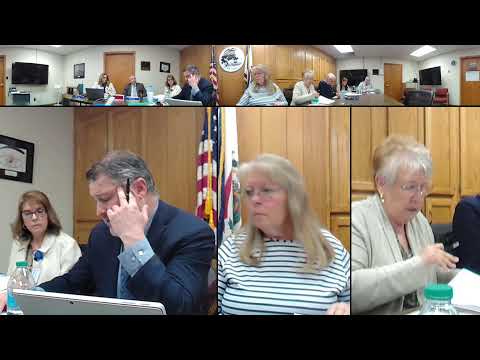
Jeff Kelly, the West Virginia Department of Education official serving as the state superintendent’s designate, convened a sequence of personnel hearings concerning proposed reductions and transfers in UPSHUR COUNTY SCHOOLS and said the acting state superintendent approved the staffing actions after the sessions concluded.
The hearings — which included teachers, program coordinators and support staff — focused on the expected effects of eliminations or transfers and, in several cases, apparent inconsistencies in seniority or job classification. "The news about my proposed termination has been very difficult to process," choir director Lauren Hall said, reading a prepared statement that described rebuilding a diminished program, fundraising nearly $7,000 for chairs and stands, and advancing students to state‑level ensembles.
Why it matters: the hearings were conducted while the county remains under a Board of Education intervention declared under West Virginia Code 18‑2E‑5, which temporarily delegates operational authority to the state superintendent. That delegation means final determinations on the personnel actions rest with the state office, not the local board.
Staff testimony and key claims
Pre‑K coordination: Lorie Woods, the county’s pre‑K supervisor, told the panel that the pre‑K coordinator role is funded through restricted federal dollars and governed by West Virginia Board of Education policy 2525. Woods said the job is a county‑wide coordination and compliance position required to maintain enrollments, manage collaborative classroom contracts and meet state and federal monitoring requirements. “Eliminating this position does not solve a state aid funding issue,” Woods told the panel, saying the role supports an 86 percent pre‑K participation rate and statewide partnerships that would be at risk without dedicated leadership.
Technology staffing and seniority disputes: several technology staff and a representative from West Virginia Professional Educators raised concerns that seniority and certification classifications (technology integration specialist, TIS, versus technology system specialist, TSS) were not being applied consistently. Miranda Skidmore and Danielle Rexro described device‑deployment and inventory work countywide and submitted ticket counts and seniority lists for consideration; Superintendent Miller explained the administration’s interpretation that TIS and TSS seniority are tracked separately, which affects bumping and transfer rights.
Arts and course access: art teachers Cristiana Bouvy and Ela Gum (fine arts department chair) warned that cutting a third art position would reduce available seats and supplies (noting clay costs in ceramics), constrain scheduling and limit access for students with IEPs. Gum cited exit‑survey and course‑demand data the department provided to the panel showing significant student interest in upper‑level classes and field trip opportunities that the department coordinates.
Athletics and extra hours: Taylor Stacy, assistant principal and athletic director, described extensive after‑hours work tied to scheduling, youth coordination and events. Stacy estimated more than 80 evenings worked so far that school year (a conservative estimate he translated to roughly 320 overtime hours) and questioned parity between stipend amounts and the scope of the role.
Alternative‑placement program: Stephanie Lane, the alternative‑placement case manager for the SOS program, and Maggie McQueen of Community Care of West Virginia described the program’s outcomes. They said students entering with chronic absenteeism improved to attendance rates around 98–99 percent and that the elementary program had served 24 students with 12 successfully reintegrated. They urged that removing the case‑manager role would undermine program continuity and student supports.
Process and clarifications
Hearing format and evidence: witnesses were sworn, given 10 minutes each, and were allowed to submit packets, letters and exhibits. Several employees noted discrepancies between initial transfer letters and later notices that referenced termination; the administration said the position eliminations would result in transfers or placement on preferred recall when applicable and pointed employees to available grievance procedures and administrative review if errors in seniority are identified.
Final action: after a brief recess the designate reiterated the statutory basis for the intervention (West Virginia Code 18‑2E‑5) and said, acting in the capacity of the board for Upshur County, that the proposed personnel actions presented by Superintendent Miller were approved. No roll‑call vote or individual tallies were recorded in the public hearing transcript; the designate stated the approval on behalf of the acting superintendent.
What’s next: according to the hearing record, final determinations will be made by the state superintendent (or her designee) following completion of the personnel hearings; affected employees were advised of grievance and administrative review options.
The hearing concluded with the panel entering the exhibits submitted by employees and adjourning the session.