Get Full Government Meeting Transcripts, Videos, & Alerts Forever!
Get email alerts on the Teacher Compensation topic
No spam. Unsubscribe anytime.
Teachers, students and parents urge higher pay as union disputes $16 million stability fund
Summary
Dozens of students, parents and teachers urged the Washington Unified board to prioritize higher teacher pay and retention, while union speakers criticized the district’s $16 million stability fund as converting recurring resources into one‑time reserves.
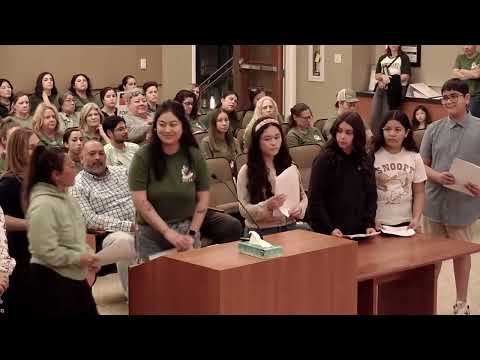
Dozens of teachers, students and parents told the Washington Unified School District board on Oct. 9 that teacher shortages and low pay are harming classrooms and that the board should prioritize salary increases over other spending.
Speakers across the evening described classroom strain, recruitment costs and personal stories of educators leaving the profession. "You lost a man who connected with students as if they were his own," Diana Trillo Chrisman told the board, describing a third‑grade teacher who left because he "couldn't afford to be a teacher anymore." She urged the district to "do better for West Sacramento. Our children deserve a Sal in their lives." (Diana Trillo Chrisman)
Why it matters: Teachers argued that replacing teachers is expensive and disruptive, and that retention investments yield better student outcomes than one‑off initiatives. Several speakers tied compensation to basic cost‑of‑living concerns — including high monthly benefit contributions cited by speakers — and warned of further attrition without corrective action.
What speakers said: At the meeting, WSTA representatives expressed broader union concern about a newly created $16 million 'budget stability fund' in Fund 17. The union characterized that fund as money taken from recurring ending balances and parked so it appears 'one‑time,' arguing the district is effectively prioritizing stabilizing reserves over frontline pay and recruitment. "We are bankrolling a hypothetical financial disaster with $16 million," the union speaker said during association remarks. (President Nep, WSTA representative)
Multiple classroom teachers echoed that theme during public comment. Sarah Fowler, a reading intervention specialist with 18 years in the district, said she loves the work but "I cannot keep doing it if I cannot support my own family," and asked the board to "please direct the district to pay us fairly." (Sarah Fowler)
Students and parents also pressed the board. River City junior Connor Lewis said his teachers "care about my learning and my mental health" and asked the board to act so teachers "are motivated, respected and supported day in and day out." (Connor Lewis)
District response and context: In association remarks earlier in the meeting, WSTA summarized the district explanation that the $16 million was established from ending fund balances — dollars not spent at the end of the budget cycle — to provide an additional stability reserve. The union disputed the need and said the district could instead use recurring resources to address compensation.
What’s next: Board members and staff spent substantial time during the meeting discussing fiscal transparency, the budget advisory committee and the bargaining calendar. Several trustees encouraged continued collaboration with labor leadership and staff to surface options; union and community speakers said they will keep pressure on negotiations to secure more competitive pay.
Ending: Speakers ended the public‑comment block urging concrete action from the board and the district’s negotiators to stabilize staffing and retain teachers; no formal board action on compensation was taken at the meeting.