Get Full Government Meeting Transcripts, Videos, & Alerts Forever!
Get email alerts on the State Budget And Policy topic
No spam. Unsubscribe anytime.
Goshen mayor says resilience paid off as state tax overhaul forces more than $33 million in project cuts
Summary
In a State of the City address, the Goshen mayor credited community resilience and intentional budgeting for protecting core services after the state’s SEA1 overhaul forced the city to delay or cancel more than $33 million in planned investments; he highlighted public-safety gains, lead-pipe removal and a slate of housing and redevelopment projects.
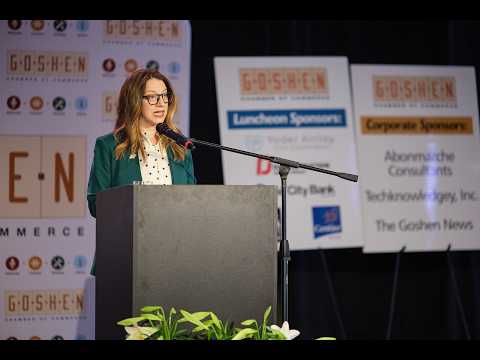
Mayor of Goshen delivered the 2026 State of the City address on May 8, saying the city weathered rapid federal and state policy changes by leaning on community resilience and strategic decision-making. He warned the state’s recent legislative package, SEA1, reshaped local government financing and required the city to pause or eliminate major capital work to preserve core services.
"Resilience and adaptation is simply part of our DNA," the mayor said, framing the address around how residents and institutions responded to policy shifts and fiscal pressure. He told the audience that in the first 100 days of 2025 there were "more than 40 federal executive actions" and significant state changes that affected local taxation and borrowing.
City leaders and residents lobbied the legislature for incremental fixes ahead of the 2026 session, the mayor said, and the city began planning multiple budget scenarios. As a result of SEA1’s impacts, he reported the city has "delayed or eliminated more than $33 million in planned investments," listing examples including the South Fire Station, facility improvements and the Shanklin Park pool replacement.
The mayor emphasized protecting core services while trimming capital spending. He outlined five guiding budget principles: protect core services; invest in quality of place; pursue smart, sustainable growth; modernize government operations; and expand community partnerships. "We had to make cuts. There was simply no way around it," he said.
The address also highlighted operational and programmatic accomplishments. He noted Goshen’s Fire and EMS handled a record caseload—more than 6,000 calls in 2025—and described a new mobile integrated health unit intended to address root causes such as homelessness, addiction and mental health that drive emergency calls. The mayor said police calls fell slightly to about 15,000 and "major incidents involving firearms have dropped more than 50% since 2022."
On utilities and infrastructure, the mayor said the city invested $6.6 million in road paving in 2025 and that water and wastewater teams delivered more than a billion gallons of clean water with zero discharge events. He announced Goshen "officially became lead pipe free," calling it a public-health milestone. In an attention-grabbing aside he told residents, "Say it with me, people. Flushable wipes are not flushable," noting 41 sewage lift stations and overtime spent clearing plugged pumps that, he said, produced about 3.6 tons of bio-solids sent to the county landfill (phraseology taken from the address).
The mayor celebrated housing and redevelopment work under way, including a $40 million program targeting underutilized properties; a planned dance studio at 113 West Jefferson; a housing project at Third and Jefferson; a 136-unit market-rate conversion at the former Aerial Cycle Works site; and potential long-term additions in the Cherry Creek area that he said could add about 1,400 housing units over 15 years. He also described partnerships for workforce training at the Goshen Airport, including a Red Hawk Fire and EMS training academy with Goshen Community Schools and new mechanic and pilot education opportunities.
To modernize internal operations, the mayor said the city consolidated GIS, data management and IT into a new Innovation and Technology department, naming Maddie Layman as director. He also highlighted community partnerships that issued 1,700 building permits and 2,100 inspections last year, leading to 17 rehabilitated homes formerly identified as blighted.
The mayor closed by returning to the address’s theme: the city’s capacity to adapt and support one another. He thanked residents and community partners for their role in maintaining services and pursuing long-term stability, and said the city will continue engaging with state leaders to protect local priorities.
The address did not include any formal votes or ordinance actions. The mayor cited SEA1 by name but did not provide a statutory citation; the city described ongoing advocacy for incremental legislative changes in 2026.