Get Full Government Meeting Transcripts, Videos, & Alerts Forever!
Get email alerts on the Board Decisions topic
No spam. Unsubscribe anytime.
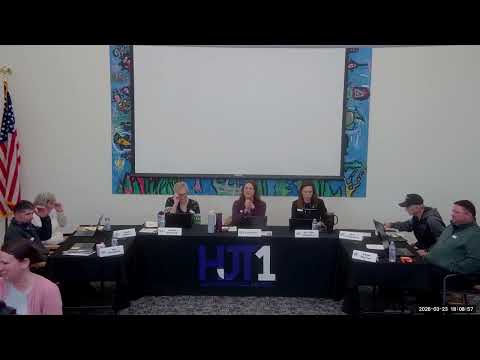
Harford J1 board approves curriculum adoptions, vendor contracts and $270,000 buildings package
Summary
At its March 23 meeting the Harford Joint One School District Board of Education approved multiple 2026–27 vendor agreements, adopted middle-school curriculum items and authorized a buildings and grounds package not to exceed $270,000; most motions passed by roll call vote.
The Harford Joint One School District Board of Education on March 23 approved a group of operational and curriculum measures for the 2026–27 school year, including cooperative purchasing for school nutrition, one-year technology service agreements with neighboring districts, the adoption of a middle-school Spanish curriculum pilot, and a buildings and grounds package capped at $270,000.
The board approved ratifying the initial proposal exchange with the Hartford Elementary Education Association in open session under state collective-bargaining procedures after a motion and second; a roll-call vote recorded five yes votes and no dissent. The board also voted to join the Wisconsin School Nutrition Purchasing Cooperative for 2026–27, a cooperative intended to consolidate food, bread and milk vendors across participating districts to leverage purchasing volume.
Administration presented a buildings and grounds package focused on exterior work and remaining referendum projects, including demolition of an old shed/structure at the Rossman site and significant asphalt replacement near the building. Administrators said asbestos testing had been performed and they were awaiting the report; the authorization was structured as not-to-exceed $270,000 to allow for contingencies. “We feel like this is a responsible project list,” one administrator said, noting the district prioritized exterior projects to reduce disruption inside schools next year.
The board approved two one-year technology consulting agreements with neighboring districts that include a 3% rate increase for 2026–27; presenters said the arrangements provide revenue that helps maintain the district’s technology department. Board members discussed the time technicians spend on site versus remote support and the flexibility of single-year contracts.
Curriculum approvals included a three-year licensed middle-school Spanish curriculum from Savas Learning Company (cost not to exceed $6,878) after a successful pilot and a Spanish reading intervention program from Pacific Learning for K–3 multilingual students, which the board approved (no cost presented in the motion discussion). The board also renewed a middle-school social studies digital collection with Houghton Mifflin Harcourt including civics content (cost not to exceed $11,172) and renewed Typetastic keyboarding and digital citizenship licenses (cost not to exceed $4,480).
Votes at a glance
- HA initial proposal exchange (ratify initial HA offer): Approved by roll call (5 yes, 0 no). - Wisconsin School Nutrition Purchasing Cooperative Agreement (2026–27): Approved by roll call (5 yes, 0 no). - Buildings & Grounds package (2026–27), not to exceed $270,000: Approved by roll call (5 yes, 0 no). - Technology agreement — Aaron School District (2026–27, one year): Approved by roll call (4 yes, 1 no — Louise voted no). - Technology agreement — Herman Neosa/Rubicon School District (2026–27, one year): Approved by roll call (majority yes). - Spanish middle-school curriculum (Savas Learning Company), not to exceed $6,878: Approved by roll call (unanimous among present members). - Spanish reading intervention (Pacific Learning): Approved (vote recorded in open session). - HMH middle-school social studies renewal, not to exceed $11,172: Approved by roll call (unanimous among present members). - Typetastic keyboarding/digital citizenship renewal, not to exceed $4,480: Approved by roll call (unanimous among present members). - Consent agenda (minutes/bills/treasurer/personnel): Approved by roll call.
The board discussion repeatedly distinguished between planning/contingent work and formal commitments: administrators characterized the buildings authorization as “not to exceed” to accommodate asbestos or demolition contingencies; technology contracts were brought forward as one-year agreements to preserve flexibility. When asked about the Rossman demolition and potential asbestos costs, administration said environmental testing had been done and they expected to have a written report within days; if remediation is required the district built contingency into the not-to-exceed amount.
The meeting packet referenced state law related to public notices and bargaining: state statute citations were noted in the agenda (for example, collective-bargaining exchange procedures). When budget figures were discussed, speakers provided explicit numbers for contract ceilings; where dollar amounts were not specified in discussion (for example, the Spanish reading intervention motion), the board did not tie a specific dollar figure to the motion during the public discussion.
The board closed the meeting with the routine consent agenda and adjournment; next steps noted in administrative reports included a candidate forum at Central Middle School this week, absentee ballots beginning ahead of the April 7 spring election, and the April organizational meeting when new board members (if elected) would be sworn in and officers chosen.