Get Full Government Meeting Transcripts, Videos, & Alerts Forever!
Get email alerts on the District Budget topic
No spam. Unsubscribe anytime.
Selah School District lays out plan to close budget gap through attrition, program cuts and operational savings
Summary
District leaders told the board at a study session that declining enrollment and modest state funding increases leave a projected deficit for 2026–27; leaders aim to narrow the gap to about $800,000 using attrition, program reductions, cooperative-agreement changes and operational savings.
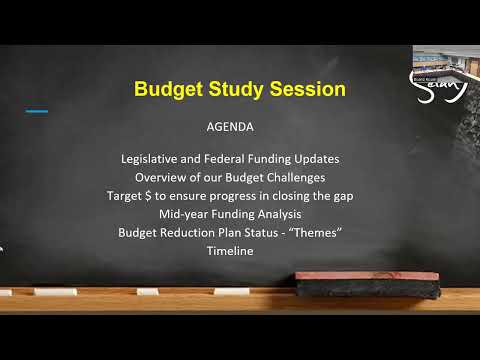
Selah School District leaders presented a multi-pronged plan at a study session to reduce an anticipated budget shortfall for the 2026–27 school year, saying they expect to rely primarily on attrition, targeted program cuts and operational efficiencies rather than immediate layoffs.
Chris, the district presenter, opened the briefing by flagging falling enrollment and its budgetary effect: “we're looking to receive a slight increase in funding, but with our declining enrollment, that will probably net to a a reduction with 109 less students.” He and Kevin said state funding measures—an MSOC increase and an expected IPD (cost-of-living) adjustment of roughly 2.6%—are unlikely to fully offset the district’s rising compensation and operating costs.
Kevin explained the local implications of recent legislative choices, including the suspension of an anticipated LEA (levy equalization) increase that had been expected in prior sessions. He warned of a larger “LEA cliff” expected in 2028 unless the legislature acts to change the funding formula.
District staff emphasized that most spending is people-related—about 84% of the budget—and that the goal is to avoid reduction-in-force actions where possible. They reported an overage of roughly 12.8 FTE on the teaching side that they hope to resolve through attrition and internal reassignments. A separate board member asked about substitute costs; Chris responded that the district’s substitute line runs about $1.8 million a year.
Programmatic changes under consideration include ending a Communities in Schools contract that funded two bilingual support staff (about $71,000) and curbing professional development and large-scale curriculum adoptions. The district also plans to review cooperative agreements with Educational Service District (ESD) 105 to determine services they can provide internally.
Operational steps include pausing capital purchases, tightening building budgets (which have already been trimmed 25% in recent years), pausing nonessential device replacement, and installing on-site diesel fueling for buses to capture estimated fuel savings. Kevin said these combined measures aim to reduce the projected deficit to approximately $800,000 or less.
The board was told the district will present a draft budget-reduction plan in April, return with a final draft in May, and seek budget adoption in June to align with a migration to a new financial system. The presenters stressed transparency and the intent to minimize classroom impacts while maintaining essential services.
The study session closed with board members thanking staff for the level of detail and asking follow-up questions about transportation fuel tanks and substitute-cost accounting. The district did not adopt any formal action at the session; next steps are the April draft plan and subsequent board deliberations.