Get Full Government Meeting Transcripts, Videos, & Alerts Forever!
Get email alerts on the School Budget topic
No spam. Unsubscribe anytime.
Lebanon Community SD 9 projects $2 million in cuts as enrollment falls and costs rise
Summary
District staff told the budget committee the district will seek $2 million in 2026–27 reductions—largely through attrition—after presenting enrollment declines, rising unemployment claims and insurance costs, and the mechanics of state school fund calculations.
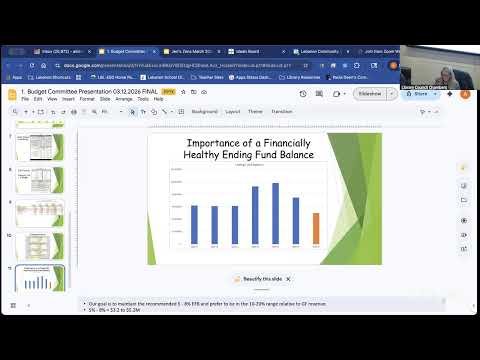
A staff member for Lebanon Community SD 9 told the budget committee the district plans to reduce total expenses by $2 million for the 2026–27 school year, primarily by right‑sizing staffing through attrition.
The presenter opened the meeting by outlining the committee’s role to review and recommend changes to the proposed budget. She said declining enrollment is the key driver informing the reduction plan: October 1 is the enrollment high‑water mark, the district typically sees about a 73‑student drop by year‑end, and current March data show a decline of 74 students. The district began the current year at 3,888 students and projects to finish at about 3,815; end‑of‑February enrollment was 3,818.
The staff member described how the state school fund calculation (the district’s ADMW) and property‑tax projections affect revenue, noting the state pays districts on the higher of two years and adjusts estimates multiple times annually. She said the district’s total budget is roughly $52 million and that the state school fund portion shown on slides was about $38 million.
Rising, less‑visible expenses were highlighted as pressure points. The presenter said unemployment claims by classified staff for spring, summer and winter breaks have surged: four years ago the district spent about $8,270 on such claims; the budget plans for roughly $250,000 next year because the unemployment office has been approving many claims and denials have been difficult to secure. The presenter added the district’s summer unemployment invoice last year was about $88,000.
Property and liability insurance premiums were also cited as a growing cost, rising from about $390,000 four years ago to about $891,000 this budget cycle. On retirement costs, the presenter said PERS budgeting is held at 100%, and that staffing remains about 80% of district expenses, limiting where budget reductions can be found.
Presenter: “This is really about enrollment being a concern; that’s the theme for our budget,” she told the committee, urging transparency and noting the district will try to achieve most reductions through attrition to minimize layoffs.
Committee members asked technical questions about unemployment eligibility, summer pay offsets and contract terms. The presenter said classified staff who are offered summer work are not supposed to collect unemployment, but the district has experienced difficulty getting claims denied and is still pursuing answers about how wage reporting and benefit offsets work in practice.
Committee members also clarified a contract with Sandridge: the presenter said the contract cap with Sandridge is 415 students, it is a 10‑year contract currently in its second year, and it does not auto‑renew.
The district plans to release the full budget document for public review on May 7. The first budget committee meeting to consider the proposed budget is scheduled for May 14; a second meeting would be held on May 21 if needed. The presenter said memos and further communications will be sent to staff and committee members before the May 14 meeting.
No formal motions or votes were recorded during the presentation portion of the meeting; the committee was encouraged to submit questions by email ahead of the May committee meeting.