Get Full Government Meeting Transcripts, Videos, & Alerts Forever!
Get email alerts on the School Budget topic
No spam. Unsubscribe anytime.
Oakfield-Alabama school board outlines budget relying on 4% levy, reserve use and cuts to staffing and projects
Summary
District administrators told the board a proposed budget depends on a 4% tax-levy increase, $625,000 from reserves and deferred capital outlay; officials warned a 30% spike in health-insurance costs and rising utilities drove much of the pressure and could force staff and program reductions.
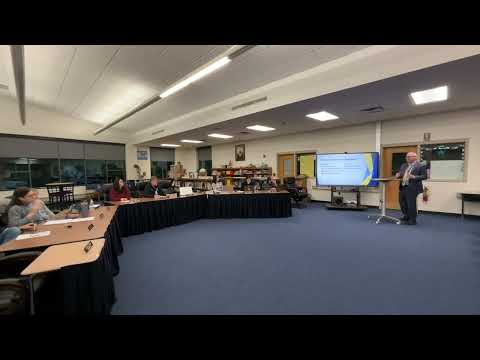
Oakfield-Alabama Central School District officials told the board at a budget workshop that next year’s spending plan depends on a 4% tax-levy increase, additional state aid and drawing $625,000 from the district’s appropriated fund balance while also trimming staff, equipment and projects.
The presenter, addressing the fourth budget workshop, said the district’s projections show roughly a $2.3 million year-over-year increase in proposed expenditures but noted that last year’s contingent budget made that comparison misleading. “This is a million-dollar increase,” the presenter said of health-insurance costs, adding that the district expected about a 12% premium rise but received an approximate 30% increase.
Why it matters: the district must balance rising personnel and benefit costs with limited revenue options. The plan presented to the board would ask voters for a 4% levy increase, rely on one-time reserve use and move a bus purchase to a separate ballot proposition rather than the general fund. If voters reject the levy or the bus proposition, administrators said, the district would face additional cuts under a contingent budget.
What officials proposed and why: administrators described a set of staffing and program adjustments across the district. At the elementary level, the presentation proposed reducing many grade-level sections from three to two, which will push some classes into the low-to-mid 20s in size while maintaining fourth- and fifth-grade departmentalization for math and ELA. At the high school, several teacher retirements and non‑returns mean some electives could be lost; officials said AP Physics is unlikely to be offered next year because of low enrollment.
The presenter said some retirements would allow duties to be absorbed by existing staff, while other positions would be eliminated or reconfigured: a cleaner position will not be filled, maintenance mechanic staffing will be trimmed as the facilities director retires, and one clerical position will be absorbed. The district also plans to condense bus runs and eliminate an underused 4:30 p.m. run to find operational efficiencies.
On equipment and capital outlay, the presenter said the district reduced an initial equipment wish list from over $300,000 to approximately $81,000. The presenter emphasized that the district previously budgeted roughly $100,000 annually for small capital projects that generated building aid; because capital outlays were removed from the 2025–26 budget cycle, the district lost that revenue stream and must work to restore the cycle.
Transportation and ballot items: administrators described a separate proposition to finance buses rather than including bus purchases in the general fund. A board member confirmed the bus request totals three vehicles (two small buses and one large bus). The district also proposed replacing an outdated fuel-management system to improve accounting for vehicle fuel and mileage; presenters said the system is no longer supported and needs to be upgraded for auditing and tracking purposes even as the district explores eventual electrification.
Revenue assumptions and contingencies: the budget relies on a 4% levy increase, increased state aid and the use of $625,000 in appropriated fund balance. The presenter said the district is projecting higher utility costs and said the reserves are being drawn down; “we are actually using our savings account,” the presenter said, warning that persistent use of reserves is not sustainable and could force layoffs if not addressed. The presenter said contingent-budget cuts would total approximately $227,000 if the board had to adopt a contingency plan instead of the proposed budget.
Pilots and uncertain revenue: the presenter clarified that revenues tied to local pilot agreements (including payments referenced from Plug Power and a stream data center) are not guaranteed and are not included in next year’s budget until funds are received. Board members were reminded that pilot payments and other negotiated revenues are contingent and should not be treated as certain operating revenue.
Next steps: the board was told it will vote to adopt a budget on April 14, hold a budget hearing on May 12 and put the budget (along with board elections and a bus-financing proposition) before voters on May 19. Administrators said they would provide a clearer monthly-tax impact breakdown before the April 14 adoption; based on current inputs the presenter offered a rough estimate of about $17 per month per $100,000 of assessed value but cautioned three variables remain (tax levy, equalization rates and assessed values).
The board also completed procedural business: it entered an executive session on personnel at 6:32 p.m. earlier in the meeting and later returned to regular session; motions to enter and to return were moved, seconded and passed.
The board will consider the adoption of the proposed budget on April 14 and will notify the public of the hearing and vote dates.