Get Full Government Meeting Transcripts, Videos, & Alerts Forever!
Get email alerts on the Ai Policy topic
No spam. Unsubscribe anytime.
Reporter warns Audubon board about legal risks of classroom AI image tools; district schedules AI policy meetings
Summary
A local reporter urged the board to restrict student access to AI image-edit tools after describing real-world examples and pending lawsuits; the board confirmed upcoming governance and AI task-force sessions to draft broad policy language and detailed regulations.
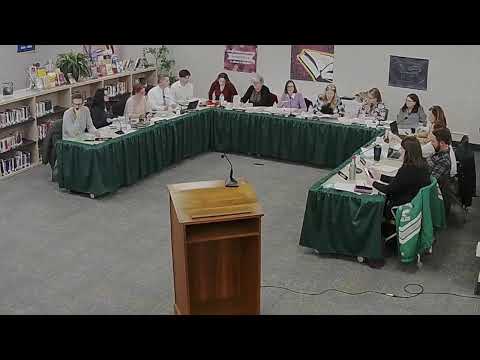
During public comment the board heard a pointed warning about student use of generative AI tools. Jen Miller, a freelance reporter, told the board that AI image-edit platforms can be used to create non-consensual sexualized images and cited recent investigations and lawsuits in other states as evidence of real legal risk.
Miller said the risk is not hypothetical: she cited reporting that some platforms produced large volumes of sexualized images — including images of minors — soon after adding photo-edit features, and she urged the board to think carefully before permitting student access to those tools. “AI might have seemed like a fun party trick, but those days are over,” Miller told the board.
District response and process: the board had already scheduled governance work and an AI task-force meeting to craft district policy language. Governance members earlier described the AI policy effort as a two-step process: broad policy language to be drafted by the governance committee (scheduled March 30) and a roundtable of the AI task force (scheduled March 31) where regulations and operational details would be fleshed out by administrators and lawyers.
Why it matters: the comment flagged several operational and legal issues for district leaders — student privacy, image ownership, nonconsensual edits, and the potential for classroom assignments to create exploitable datasets. Board and administration said they will factor those legal and safety concerns into the AI regulation development timeline and keep the community informed as the draft policy moves from governance to operational regulation.
Representative quotes: “Please consider the potential legal risk of encouraging children to be anywhere near these platforms,” Miller said, citing recent cases and investigations.
Ending: Governance and the AI task force will meet in late March to draft policy language and identify regulation-level safeguards before pilot or classroom uses are authorized.