Get Full Government Meeting Transcripts, Videos, & Alerts Forever!
Get email alerts on the District Budget topic
No spam. Unsubscribe anytime.
Audubon board warns of deep budget gap after 37% health insurance hike; administration to run tax-levy scenarios
Summary
Board members said a projected $2 million, roughly 37% jump in health insurance costs will raise district coverage to about $6 million and create a near-term budget gap; after trimming options, the board signaled support for using the state healthcare levy adjustment if necessary and asked administration to model worst-case scenarios.
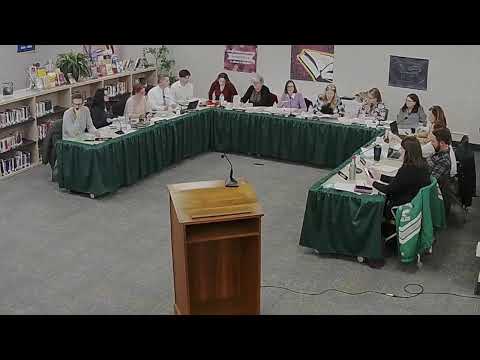
The Audubon Board of Education spent the bulk of its meeting reviewing a budget shortfall driven principally by a steep rise in health-insurance costs and set next steps for balancing the 2026–27 budget.
At the operations report, board member Mark Gaddy said the district faces an “unprecedented” rise in health premiums that would add roughly $2 million to the district’s calendar-year 2027 health-insurance expense, raising total projected costs to about $6 million. Gaddy told the board the increase is roughly 37% over the current year, and described that spike as the single largest hurdle to a balanced budget.
Why it matters: the district’s preliminary numbers show a remaining shortfall even after the administration’s first round of cuts. Administration and the operations committee reported a working gap of about $483,000 after initial reductions. Board members and staff said further trimming of nonessential “wish list” items can help but will not close the difference unless the board uses a one-time state option known as the healthcare adjustment (a tax-levy mechanism districts may use to recoup some of the insurer-driven increase).
Administration presented two illustrative tax scenarios. A strictly statutory 2% local levy (the typical baseline) would raise local taxes by an estimated five cents per $100 of assessed value — roughly $106.70 annually on the district’s sample house valuation. Using the full healthcare adjustment would increase the levy more substantially; administration showed an estimate near a 9.68% local increase, roughly 21 cents per $100 of assessed value, or about $437 annually on the same sample property.
Board discussion focused on trade-offs. Members emphasized avoiding cuts that would reduce current instructional programs or result in staff layoffs, but also acknowledged the challenge of finding $483,000 in further reductions without harming services. The administration described the mechanics of the healthcare adjustment and said using it would increase local property taxes; board members asked administration to exhaust every trimming option before including any levy add-on in the preliminary budget submitted to the county. Business administrator remarks stressed the district’s constrained buying power when seeking alternative insurance plans in a tight market.
A straw vote and next steps: after extended discussion the board signaled majority support — by body language and affirmative comments from committee members — to allow administration to model and, if necessary, include the full healthcare adjustment in preliminary numbers to the county so that elected members can evaluate a concrete worst-case scenario. The board asked administration to return with a set of scenarios (plan A/B/C) showing what would be cut at each level of levy adoption and the concrete tax impact for households.
Votes and formal actions at the meeting included routine approvals of minutes and consent items for operations, education and human resources; the board also scheduled additional committee meetings (operations and governance) and a public budget hearing within the state window.
What’s next: administration will present detailed worst-case and middle-case budget scenarios at the board’s upcoming meetings and produce a public budget presentation in the April 24–May 7 hearing window. The board emphasized that the preliminary budget submission to the county is not final and can be adjusted before the public hearing.
Representative quotes: “Our insurance coverage will now cost us $6 million,” Mark Gaddy said. “The word ‘unprecedented’ doesn’t seem strong enough here.”
Ending: The board plans a special operations meeting and will revisit staffing, program priorities and levy choices before finalizing the budget at the required public hearing.