Get Full Government Meeting Transcripts, Videos, & Alerts Forever!
Get email alerts on the Budget topic
No spam. Unsubscribe anytime.
Audubon board trims budget, submits tentative plan after 37% health‑care spike pushes tax rate higher
Summary
The Audubon Public School District board voted to submit a tentative budget to the county and to authorize preschool‑expansion aid materials after staff trimmed spending to lower a projected tax‑rate increase from roughly 9.58% to 7.59%; the reductions aim to avoid layoffs while responding to a sudden state health‑care premium jump.
The Audubon Public School District board on the agenda approved submission of a tentative budget to the county and authorized its business administrator to submit preschool‑expansion aid materials after staff tightened spending to reduce a proposed tax‑rate increase driven by a sharp rise in health‑care premiums.
Miss Allen, a district staff member who presented the budget, said the district had been told by the tax assessor that the average assessed home value is about $204,700, and that a $1.1 million health‑care adjustment would have pushed the tax rate to about 9.58–9.59 percent. "With us bringing it down by that $319,000 it's at 7.59," she said, describing the cuts and the use of a portion of the district's banked cap.
The reductions were designed to avoid involuntary layoffs. "We were not going to cut any staff," Miss Allen said, adding that the district expects retirements and resignations it will not refill and will shift existing personnel internally. Instead of adding new stipends or upgrading some screening tools and classroom devices this year, the district scaled back supply allotments, reduced planned technology purchases for lower grades, and shortened summer student worker hours from six to four per day.
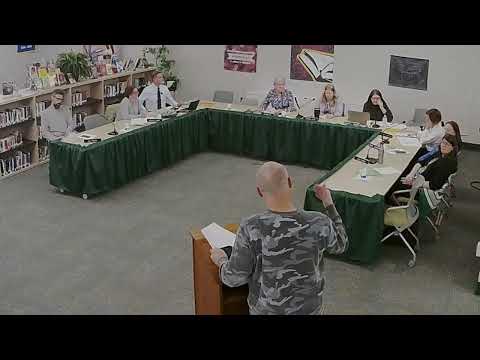
Board members repeatedly praised staff work to pare the budget. Mark Gaddy, who introduced the two operations items, thanked administrators for finding roughly $300,000 in cuts while retaining key programs and strategic priorities. A roll‑call vote recorded all members present as voting yes and both motions passed.
Officials also explained how a $319,000 balance in the district's "banked cap" functions. Miss Allen said the banked cap remains available over the next three years but must be accessed by vote and only after any future health‑care adjustments are applied. "Banked cap will . . . be there for the next three years," she said, and cautioned that the board would still need to choose to use it.
Public commenters pressed staff for more granular financial records and for an explanation of the sudden health‑care increase driving the budget pressure. Robert Goldburn asked for balance sheets, cash‑flow statements and notes; staff said the detailed "user friendly" business‑office budget is available on the district website and that the advertised budget will be posted in advance of the April 29 public hearing.
On the question of health benefits, Miss Allen said Audubon participates in the New Jersey State Health Benefits Plan and that the district had budgeted a 20 percent increase but saw the plan's premium rise 37 percent, which produced an unanticipated jump in January that added roughly $138,000 to the district's costs. "We are actively shopping for other health care at this point," she said, and staff described wellness and preventive programs under consideration to try to reduce future utilization.
Audience members pressed how much employees contribute; officials said contributions vary by salary and plan type and that the district's total premium bill is about $6 million with roughly 150–159 covered employees, an average annual premium per covered slot of roughly $37,000 (approximate). Board members urged state policymakers not to treat local property taxpayers as the default backstop for recurring increases.
The board set next steps: it will submit the tentative budget to the county office for review, publish the advertised budget on the district website ahead of the April 29 public hearing, and revisit any decisions at the final hearing. The board also authorized submission of the preschool expansion aid narrative and workbook required to pursue preschool expansion funding.
The board adjourned after confirming the next regular meeting and the final budget hearing dates.