Get Full Government Meeting Transcripts, Videos, & Alerts Forever!
Get email alerts on the School Safety topic
No spam. Unsubscribe anytime.
School board approves part‑time school resource officers to start this year
Summary
The Lac qui Parle Valley School Board voted to approve a part‑time school resource officer (SRO) arrangement shared between two deputies, who will take required SRO training this summer; the move is intended to increase on‑site safety and relationship building with students while remaining subject to statutory training and role limits.
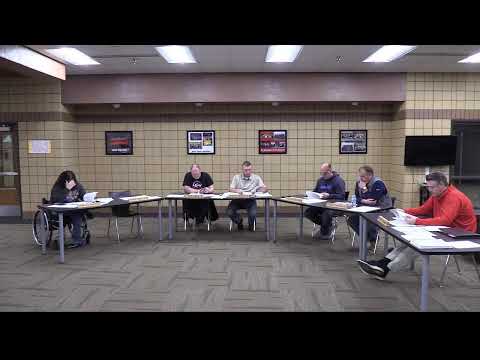
The Lac qui Parle Valley School Board on March 26 approved an arrangement to place a part‑time school resource officer in the district, to be shared initially between two deputies from the Lac qui Parle County Sheriff’s Office.
Board members voted to accept the proposal after a presentation that described the SROs as full county deputies who would be scheduled to complete required SRO training in July. The board’s motion passed by voice vote.
The county representative said the part‑time model is intended as a starting place that could expand to full time if the program proves successful. “It would be shared by two different individuals,” the representative said, identifying Deputy Dickman and Deputy Baldwin as the intended officers; both deputies are scheduled for the SRO training this summer.
Board members asked whether the deputies would retain the same arrest authorities they have as county law enforcement officers. The presenter and board members emphasized that deputies remain sworn county officers: they would be in uniform, have the authority to respond in a crisis and could make arrests when appropriate. At the meeting one board member asked whether statutes limit what SROs can do; staff responded that some role boundaries exist, that training will clarify specifics, and that the district will continue to monitor how state law evolves.
Supporters said the presence of an SRO could both shorten response time in emergencies and contribute to relationship building and prevention through programs such as DARE; staff noted deputies had already made initial introductions to the student body. Critics on the board asked for clarity about statutory limits and about how the role would interact with existing district safety protocols; staff said remaining questions would be addressed in the deputies’ upcoming training and through the contract details.
The board asked staff to proceed with the contract terms and start the part‑time presence; the motion carried by voice vote. Next steps include finalizing the contract language, confirming training completion, and returning to the board if the district pursues an expanded (full‑time) model or if legal/operational details change.