Get Full Government Meeting Transcripts, Videos, & Alerts Forever!
Get email alerts on the School Budget topic
No spam. Unsubscribe anytime.
School board approves proposed 2026–27 school and nutrition budgets, including 3% pay increase
Summary
After a public hearing with no public comments, the Westmoreland County school board approved its proposed 2026–27 school board and school nutrition budgets, endorsing a 3% salary increase, a projected $703,487 overall revenue gain and several staffing and program funding shifts.
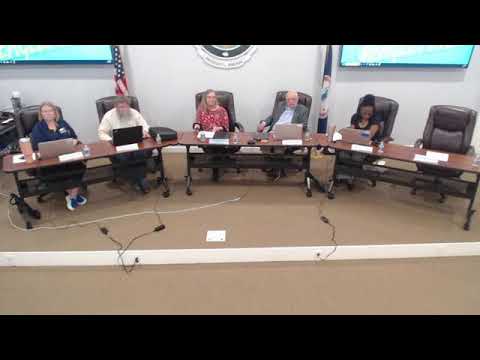
The Westmoreland County School Board voted to approve the proposed 2026–27 school board budget and the school nutrition budget after a public hearing that produced no public comment. The board approved the budgets by voice vote following a motion (seconded by Rebecca Minor) and unanimous aye votes from members who recorded votes.
Ms. Rice, who presented the proposals, told the board the packet contained familiar material and no new state updates. "This is the same information you have seen previously. We don't have any new updates from the state since we last met," she said as she opened the presentation on priorities and assumptions. She summarized the division's top goals as recruiting and retaining high‑quality staff, maintaining smaller class sizes and expanding elective course offerings.
The presentation laid out enrollment and revenue assumptions the board used to build the plan. Ms. Rice said the division projected average daily membership (ADM) of 1,512 students for 2026–27 (up from a projected 1,480 in the current year) and a projected increase for 2027–28. On revenue, she reported a projected overall increase in total revenue of $703,487 and described the funding mix as roughly 51% state, 44% local and about 4% federal, with modest additional receipts from e‑rate, Medicaid and miscellaneous sources.
Key cost and personnel assumptions in the approved proposal include a 3% salary increase for all employees (the presentation noted a 2% alternative exists but the budget is prepared on a 3% assumption), a 3% increase for part‑time daily wages (raising bus driver pay to $140 per day and car/transportation aides to $107 per day), and an hourly increase from $17.51 to $18.04 for part‑time hourly employees. Ms. Rice also said the division budgeted for overtime in transportation and maintenance and included employer‑paid retiree health insurance for six anticipated retirees.
Ms. Rice flagged a 15.4% increase in health insurance premiums, the largest in roughly a decade. The division plans to absorb 85% of that increase and pass 15% on to employees; she quantified the employer contribution for the upcoming year (if everyone stayed on the same plan) at $402,572.40.
On positions, the budget preserves existing staffing overall while reallocating roles to expand course offerings. The plan adds one elementary teacher at Washington District Elementary because of grade‑level growth, eliminates two full‑time custodial positions at the same school tied to retirement and reassignment (Ms. Rice said no one would lose employment), and funds the equivalent of a career‑and‑technical education (CTE) director. The board was told the division will strategically move a CTE position from the middle school to the high school to add courses without a budget increase.
Non‑personnel changes include higher allocations for purchased instructional services (to continue work with the Berkeley Group and potential communications support such as the Donovan Group), increased payments for participation in Northern Neck Technical Center and Chesapeake Bay Governor's School, more funding for alternative education participation and a one‑site high‑school pathway advisor, and new classroom furniture at the elementary level.
Transportation funding was moved: bus purchases were shifted from the operating budget into the capital improvement plan (CIP), which eliminated the bus line from operations. The division also plans to lease non‑bus vehicles through Enterprise to modernize the fleet. Custodial contracting will expand at Washington District Elementary and continues at the high school. The budget increases the district's share for school resource officers (SROs) as several grants expire, driving a higher local cost for SRO salary and benefits.
Ms. Rice summarized expenditures by category, noting instruction remains the largest share. She reported the operating budget before grants at $32,349,604 (an increase of $771,966 over the current year) and total expenditures with federal grants at $33,548,950 (an overall increase of $703,487). Because the division expects additional state and local revenue depending on final legislative action, the contingency reserve in the proposal was reduced with the intention to replenish it when actual funds are known.
Ms. Rice reviewed state budget scenarios: the governor's amended distribution shown to the board was $17,152,974 in state revenue; a House package would add roughly $695,554 for Westmoreland, bringing a hypothetical distribution to $17,964,052; a Senate scenario would bring the division to about $17,510,898. Ms. Rice said she expects a conference budget somewhere between the House and Senate proposals and estimated the division might see "somewhere in the neighborhood of 8 to 900,000 more" to work with if the conference report favors higher funding.
The school nutrition budget, presented separately, projects essentially flat revenue at about $1.5 million with an estimated $35,335 increase. Ms. Rice said most nutrition revenue depends on meal counts and federal reimbursements; the budget shows a slight decrease in nutrition salaries compared with a one‑time higher budgeted supervisor role in the current year but carries the same headcount and the 3% pay and benefit adjustments.
No members of the public spoke during either public hearing. Following the presentations, a board member moved to accept both the proposed 2026–27 school board budget and the school nutrition budget "as presented"; Rebecca Minor seconded. Board members recorded aye votes (Ms. Richards: I; Ms. Minor: I; Dr. Wallace: I; the chair: I) and the budgets were approved.
Board members said the division will return with a revised budget in May after state and local numbers are finalized. The meeting adjourned after the vote.