Get Full Government Meeting Transcripts, Videos, & Alerts Forever!
Get email alerts on the School District Budget topic
No spam. Unsubscribe anytime.
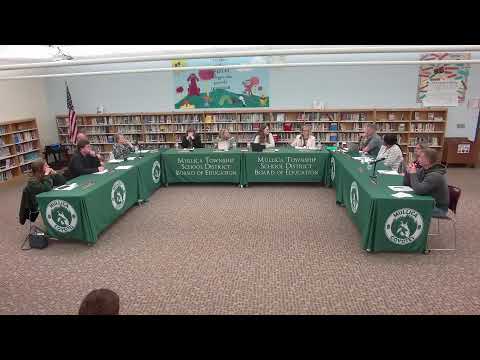
Mullica Township board approves submission of tentative 2026–27 budget with 2% tax levy increase after debate
Summary
After a budget workshop and public comment, the Mullica Township Board of Education voted unanimously to submit a tentative 2026–27 budget that raises the general‑fund tax levy by 2%, rejecting larger increases tied to the full health‑care adjustment.
The Mullica Township Board of Education voted unanimously April 1 to submit a tentative 2026–27 budget to the county superintendent that includes a 2% increase in the district’s general fund tax levy.
Business administrator Tatiana, speaking at the budget workshop, outlined the district’s financial history and said Mullica has seen enrollment decline and significant state‑aid losses: “Mullica loses 117 kids in the last 10 years,” she said, and later quantified a three‑year state‑aid decline of about $812,000. Tatiana framed three options for the board: a 2% levy increase only; 2% plus half of a calculated health‑care adjustment; or 2% plus the full health‑care adjustment (the district’s calculated health‑care adjustment was $165,000). She recommended using the adjustment in full to preserve fiscal health.
Dr. Paul, the district superintendent, urged a compromise. “My most fiscally, as your superintendent recommendation would be to go halfway,” he said, adding that the midpoint would keep some surplus available for unexpected expenses while moderating immediate tax increases. Several trustees pushed back that households had already absorbed a substantial tax increase in the prior year and urged sharper expense reductions instead.
The administration’s presentation traced the pressures driving the choices: the 2008 state funding reform that established an “adequacy” budget for each district, a 2010 property‑tax cap that limits annual levy growth to 2% (with narrow exceptions), and a recent shift away from hold‑harmless “adjustment aid” that has exposed districts with declining enrollment to aid reductions. Tatiana said the district currently serves roughly 630 students and has reduced recurring expenses by about $579,000 in recent years (administration, certified and support staffing, and consolidated transportation), but that payroll and health‑care contract increases still outpace likely revenue. For 2026–27 she listed core numbers: a $229,000 state‑aid increase this year, contractual salary increases of about $257,000, and health‑care increases of roughly $273,000.
Public commenters urged grant and shared‑service strategies to reduce local cost burdens. Amy Gate suggested pursuing LEAP grants and municipal shared services for capital work such as the front parking lot and roof repairs, while others urged longer‑term consideration of consolidation with neighboring districts to achieve scale. Several residents also asked for clearer criteria for summer programs and how grant funds (including new preschool aid) intersect with summer offerings.
Board members debated trade‑offs at length. Some members favored the more conservative 2% option, saying it forces further expense discipline and preserves the district’s ability to “bank” unused health‑care capacity for up to three years. Others argued a larger levy would shore up reserves and avoid more painful cuts or a larger future tax increase. In a straw poll the majority favored the 2% option; the board then moved to formalize the tentative submission.
At the formal motion, the board approved the tentative 2026–27 budget for submission by roll call. The budget documents read into the record showed a total general fund budget of $12,266,945, a special revenue (grant) fund of $2,837,547, and debt service of $396,181, yielding a total district budget of $15,900,673. The proposed tax levy numbers recorded on the resolution were a general fund tax levy of $6,181,347 (2% increase), debt service levy of $260,191, and a combined total tax levy of $6,441,538. The motion passed on the recorded roll call with all voting members recorded as “yes.”
What happens next: the board secretary/business administrator will submit the tentative budget to the county superintendent by the Friday statutory deadline for review and any required adjustments. The district will hold a public budget hearing in the last week of April; if there are no changes, the figures approved tonight will be those put to public hearing and later final adoption.
The meeting included other routine approvals (consent agenda items and personnel and finance motions) taken by roll call and ended with announcements about upcoming events, preschool expansion plans and the district’s centennial celebration.
The board will meet again for its next regular meeting on April 29, 2026, beginning with an executive session at 6:30 p.m., followed by the public session at 7 p.m.