Get Full Government Meeting Transcripts, Videos, & Alerts Forever!
Get email alerts on the Student Device Policy topic
No spam. Unsubscribe anytime.
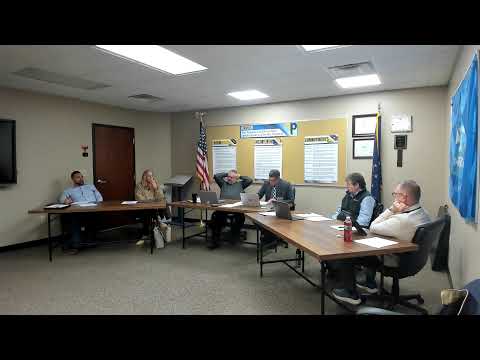
New Prairie United School Corp. board opens first reading to ban student social-media-capable devices during school day
Summary
Superintendent Dr. White told the board that a recent change in state law clarifies that cell phones and other devices that access social media cannot be used during the instructional day; trustees opened a first reading of edits to board policy 5136 to align district practice and plan to seek Department of Education guidance and legal counsel on exceptions and enforcement.
The New Prairie United School Corporation board opened a first reading on proposed edits to board policy 5136 after Superintendent Dr. White briefed trustees on a recent change in state legislation clarifying that cell phones and similar devices that can access social media may not be used during the instructional day.
"The most recent update to the legislation makes it clear that cell phone or other device usage that can be used to access social media or related platforms those devices cannot be used during the instructional day," Dr. White said, describing the rule informally as applying from bell to bell.
The nut of the proposed policy change is to align district practice with the law while preserving limited, documented exceptions. Dr. White said the administration will review technical controls on district-issued iPads and suggested that only school administration, not classroom teachers, would confiscate devices in policy violations after teacher referral. He said devices would typically be returned at the end of the school day unless the student was a repeat offender, in which case staff might require a guardian meeting.
Board members raised questions about the policy's scope and exceptions. Trustees and Dr. White discussed that pre- and post-school use (for example, in student parking lots or during extracurricular activities) would likely remain allowable, while lunch and passing periods during the instructional day would be covered by the prohibition. When a board member asked whether the policy should itemize allowable exceptions, Dr. White responded that those situations would likely be limited to medical needs or accommodations required by an individualized education program and that the district would seek legal guidance and follow any formal guidance issued by the Indiana Department of Education.
The superintendent said the administration plans to circulate suggested language in the policy's first-reading materials and bring updated student-handbook language to a future meeting for final approval. The board did not take a formal vote on policy 5136 during the meeting; the proposed edits were presented for first reading and further review.
The board is scheduled to meet again on April 27 at 6 p.m. in the district central office, where finalized handbook language and any policy revisions are expected to be considered.