Get Full Government Meeting Transcripts, Videos, & Alerts Forever!
Get email alerts on the Audit topic
No spam. Unsubscribe anytime.
External audit gives North Polk an unmodified opinion; finds three minor statutory reporting items
Summary
Independent auditors issued an unmodified (clean) opinion on the district’s FY2025 financial statements, identified no material weaknesses, and reported three minor statutory findings (two small enrollment/course certification variances and an overlimit depository balance during a bank transition) with corrective responses filed.
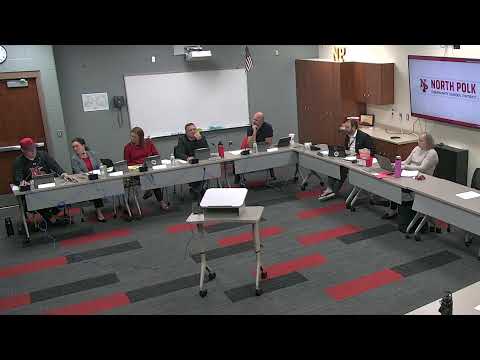
TrustPoint presented the North Polk Community School District’s FY2025 audit to the board, reporting an unmodified (clean) opinion on the financial statements and no material weaknesses in internal control.
Nick Stanley, a TrustPoint partner, told trustees total revenue for FY2025 was $37,979,949—up roughly $2.7 million from the prior year—while total expenditures were $50,344,839, an increase of about $7.4 million driven largely by facilities acquisition and construction activity. Key revenue increases included local sources (property tax and tuition/open-enrollment) and state aid.
The audit report included three statutory findings requiring board attention: two small certification variances (one student and one course) for which the district submitted corrective letters to the Iowa Department of Education; and a deposits-and-investments item where district balances briefly exceeded amounts authorized in the depository resolution during a bank transition in late 2024. The auditor characterized the findings as minor and expected them to be remedied before the next audit.
Board members thanked the auditors and district finance staff for the transparency of the report. Trustees and administrators discussed the scale of capital spending (noting approximately $14 million in facilities acquisition costs tied to ongoing construction projects) and the operational challenge of matching revenue growth to rapidly rising expenditures.
The audit presentation concluded with auditors offering to answer follow-up questions; the board recorded acceptance of the audit materials and moved on to routine agenda items.