Get Full Government Meeting Transcripts, Videos, & Alerts Forever!
Get email alerts on the Immigration Enforcement topic
No spam. Unsubscribe anytime.
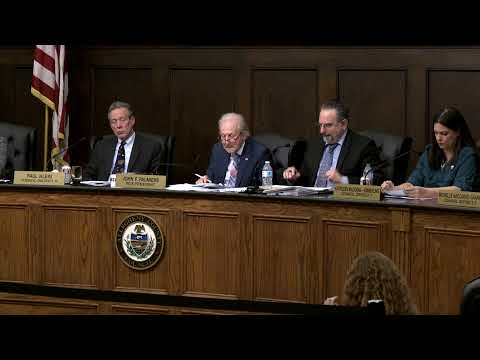
Allegheny County Council adopts ordinance limiting county cooperation with ICE after hours of public comment
Summary
After more than five hours of public testimony and heated debate, Allegheny County Council approved Ordinance 13809-26 to codify limits on county agencies’ cooperation with federal immigration enforcement. The measure passed 11–3 with one abstention amid calls for stronger protections and warnings about legal and safety risks.
Allegheny County Council on March 10 approved Ordinance 13809-26, a new part of the county code that restricts county agencies from assisting certain federal immigration-enforcement requests, after an extended series of public comments and internal debate.
The ordinance passed on a roll-call vote of 11 in favor, 3 opposed and 1 abstention. Council President Katina, who announced he had received a death threat against his child earlier in the day and said the threat had been reported to law enforcement, abstained from the final vote. Several council members and dozens of public commenters urged passage without carve-outs; a smaller number of residents and faith leaders spoke against the ordinance, saying it could impede cooperation on serious crimes.
Why it matters: Supporters said the ordinance will protect immigrants, documented and undocumented, from being detained or referred to federal custody by local employees and will reduce fear that prevents people from accessing county services. Opponents warned of unintended public-safety and legal consequences, including possible civil liability if local agencies decline to honor federal detainers or information requests.
Public comment: More than 60 speakers registered and many delivered remarks to the council. "Sunsetting legislation is dangerous," Tanisha Long told the council, urging them not to adopt a time-limited policy that could later lapse. Muhammad Ali Nasir ("Manny") said, "Make no mistake, this is a historical moment" and urged passage without dilution. Several speakers recounted alleged instances of local cooperation with ICE and described community fear; others described concern for victims of crime and urged the council to allow cooperation with federal law enforcement for serious criminal matters.
Amendments and debate: Councilors introduced several amendments during the meeting. The most prominent — a proposed three-year sunset (Adams 3.1) that would have required the council to reauthorize the ordinance in 2029 — was rejected after debate. Supporters of a sunset said it would allow the council to revisit the policy if the national enforcement climate changed; opponents said a sunset would create instability and erode the ordinance’s protective effect. Other proposed amendments that would have exempted certain offices (sheriff, district attorney, county police) or created additional law-department review were discussed and either withdrawn or defeated.
Vote and immediate follow-up: After amendment votes, the council voted to adopt Ordinance 13809-26. The clerk recorded the final tally: Mr. Adams (no); Mr. B (yes); Miss Filia (no); Mr. Fatullus (yes); Mr. Grisbeck (yes); Miss Hallum (yes); Mr. Klein (yes); Miss Madonna Emerling (yes); Miss Nakarati Chapus (yes); Mr. Paul Mary (yes); Mr. Paul Mscina (yes); Mr. Rose (yes); Miss Geger Shman (yes); Mr. Walton (no); President Katina (abstain). The clerk announced that the ordinance had passed.
Legal and implementation notes: Council debate and public testimony frequently referenced the county law department and the solicitor; the draft ordinance as introduced includes language requiring employees to decline cooperation unless presented with a valid judicial warrant and contemplates training and notification requirements. Some council members expressed concern about potential litigation risk and the need for the law department to provide clear operational guidance; others emphasized that county employees already have policies limiting participation in immigration enforcement.
What’s next: With the ordinance adopted, departments and elected row offices will need to align internal procedures with the code changes. Several council members said they intended to follow up with draft resolutions or enforcement oversight. Council also instructed staff to prepare a letter condemning threats against elected officials after President Katina disclosed the death threat made against his child and abstained from the vote because of it.
The council spent the rest of the evening handling appointments and ceremonial proclamations for St. Patrick’s Day honorees. Several county and municipal stakeholders at the meeting said they expect legal questions and implementation details to persist as departments translate the ordinance into operational practice.