Get Full Government Meeting Transcripts, Videos, & Alerts Forever!
Get email alerts on the Probable Cause Regulation topic
No spam. Unsubscribe anytime.
FPPC refers proposed limits on probable-cause conferences to law committee after heated debate
Summary
The Fair Political Practices Commission debated staff-proposed limits on records production and witness participation during probable-cause conferences and agreed to send the rulemaking back to the Law & Policy Committee to gather evidence, including internal case data and outside parties’ experiences.
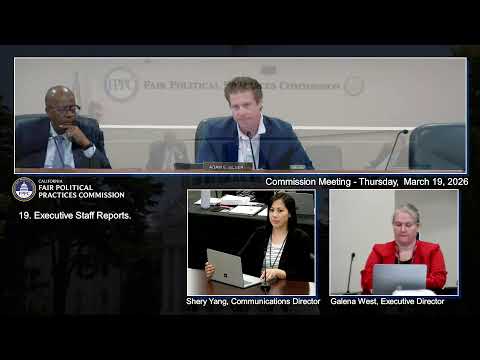
The Fair Political Practices Commission on March 19 debated proposed amendments to regulation 18361.4 that would tighten time limits on probable-cause conferences and remove or limit staff record production and witness participation. Legal staff recommended a narrow version that would treat the probable-cause stage as a limited, preliminary gatekeeping step rather than a discovery forum. John Faser of the legal division summarized staff’s position: “The only purpose of the probable cause conference is to test the sufficiency of the enforcement division's allegations. It is not a trial. It is not discovery.”
Why it matters: probable-cause conferences are the formal step that determines whether an administrative enforcement matter proceeds to a full administrative (APA) hearing. Changes that remove document production or witnesses could accelerate the process and reduce staff time, but regulated attorneys and advocacy groups said they risked unfairness and might undercut early settlements.
What happened at the meeting: commissioners heard three draft versions. Staff’s preferred draft removed record production and witnesses and set a firm 75-day conference deadline; an alternative kept records but not witnesses; a third version from the California Political Attorneys Association (CPAA) kept records and witness participation but limited supplementation.
CPAA representative James Carson told the commission that access to the enforcement file at the probable-cause stage is often decisive. “The opportunity for the respondent to see the evidence that staff is relying on to come to their PC determination is critical,” he said, arguing that records and limited witness testimony can produce settlements and avoid protracted litigation.
Commissioners pressed both sides for facts: how often have records or witnesses changed outcomes, how many staff hours do records responses require, and whether evidence shows document production helps settlement. After extended questioning and public comment, the commission voted to refer the rule changes to the Law & Policy Committee. The committee was directed to convene a hearing, solicit CPAA and other parties’ evidence and arguments, and provide internal data (including how often records/witnesses were requested, staff hours required, and whether production correlates with settlement or case dismissal).
Next steps: the Law & Policy Committee will conduct targeted fact-finding and public hearings before the commission returns to consider final rule language. The commission recorded that staff may provide staffing and historical case data to inform a decision.